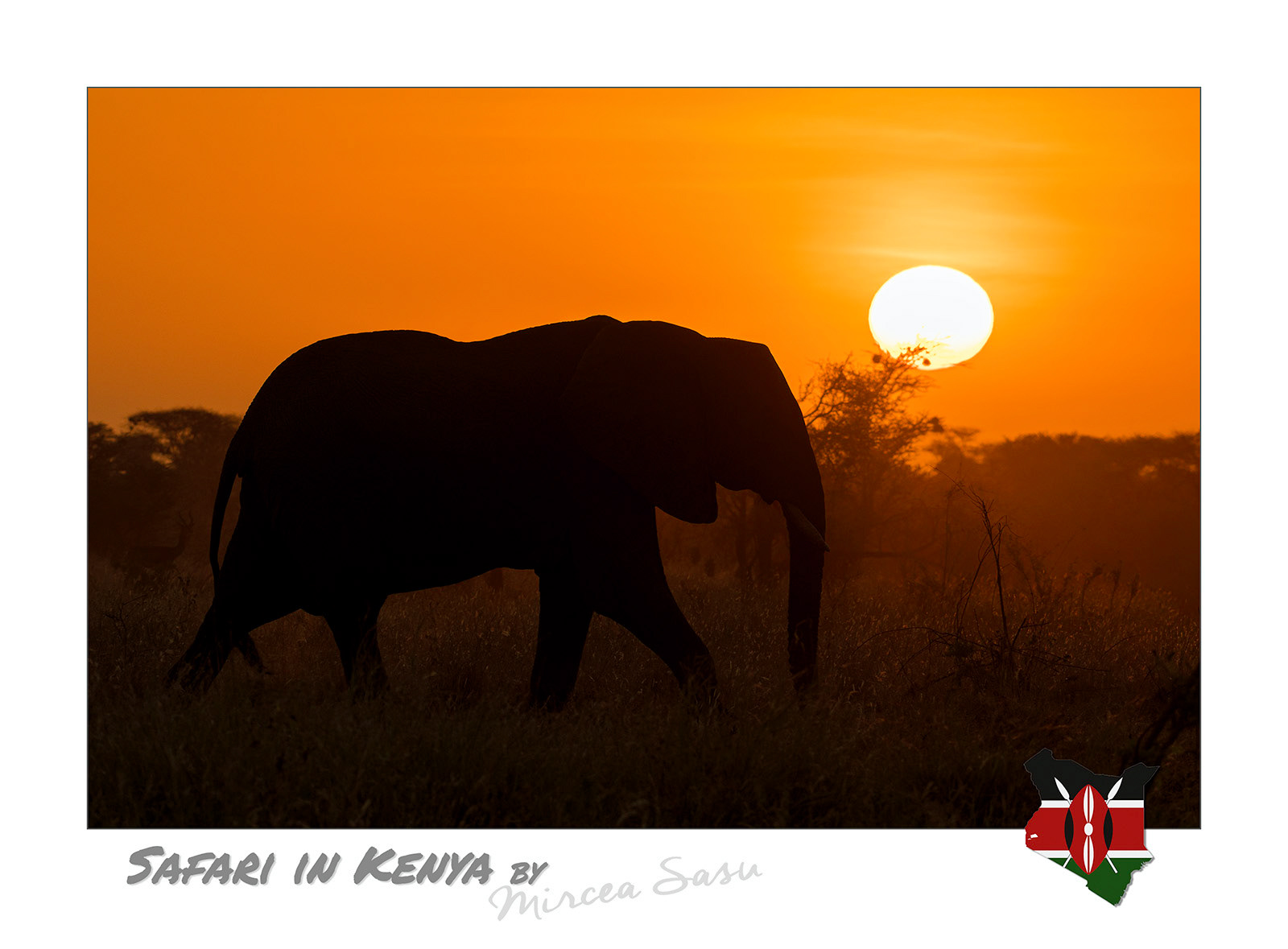
Wild, with very varied landscapes, savannahs, forests and rivers, but also a very rich fauna, the Meru National Park in Kenya is one of the largest protected areas of this country, but among the least visited. Meru is famous for the story of Elsa lioness, raised by Joy and George Adamson, a subject of the book and the movie "Born Free". african elephant (Loxodonta africana)
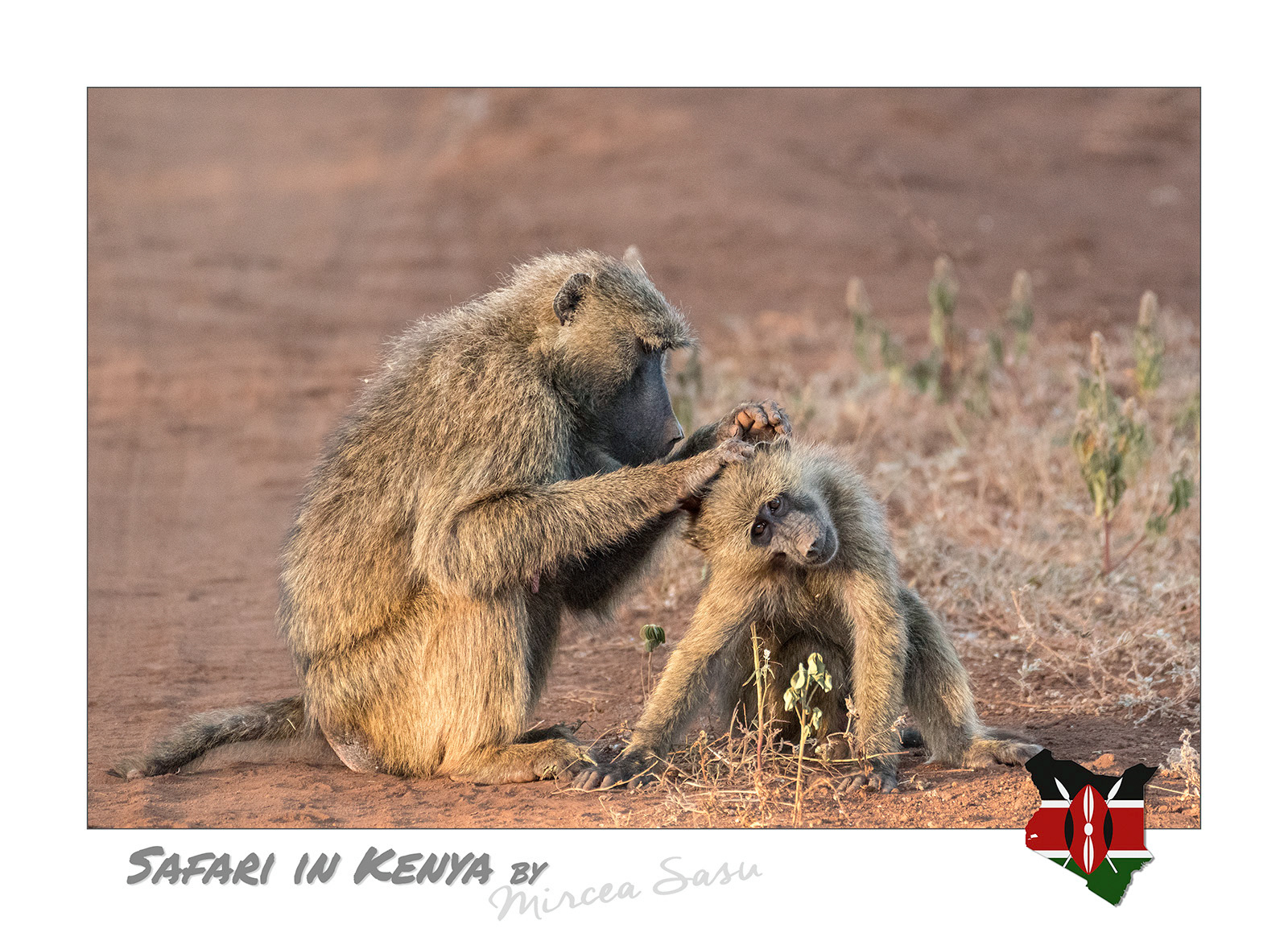
For monkeys, mutual cleaning of their fur from dirt and parasites, in addition to the hygienic aspect, also has a particularly important social role. Through this activity, individuals strengthen their social relationships and establish hierarchies and alliances necessary for the proper functioning of the group. olive baboon (Papio anubis)
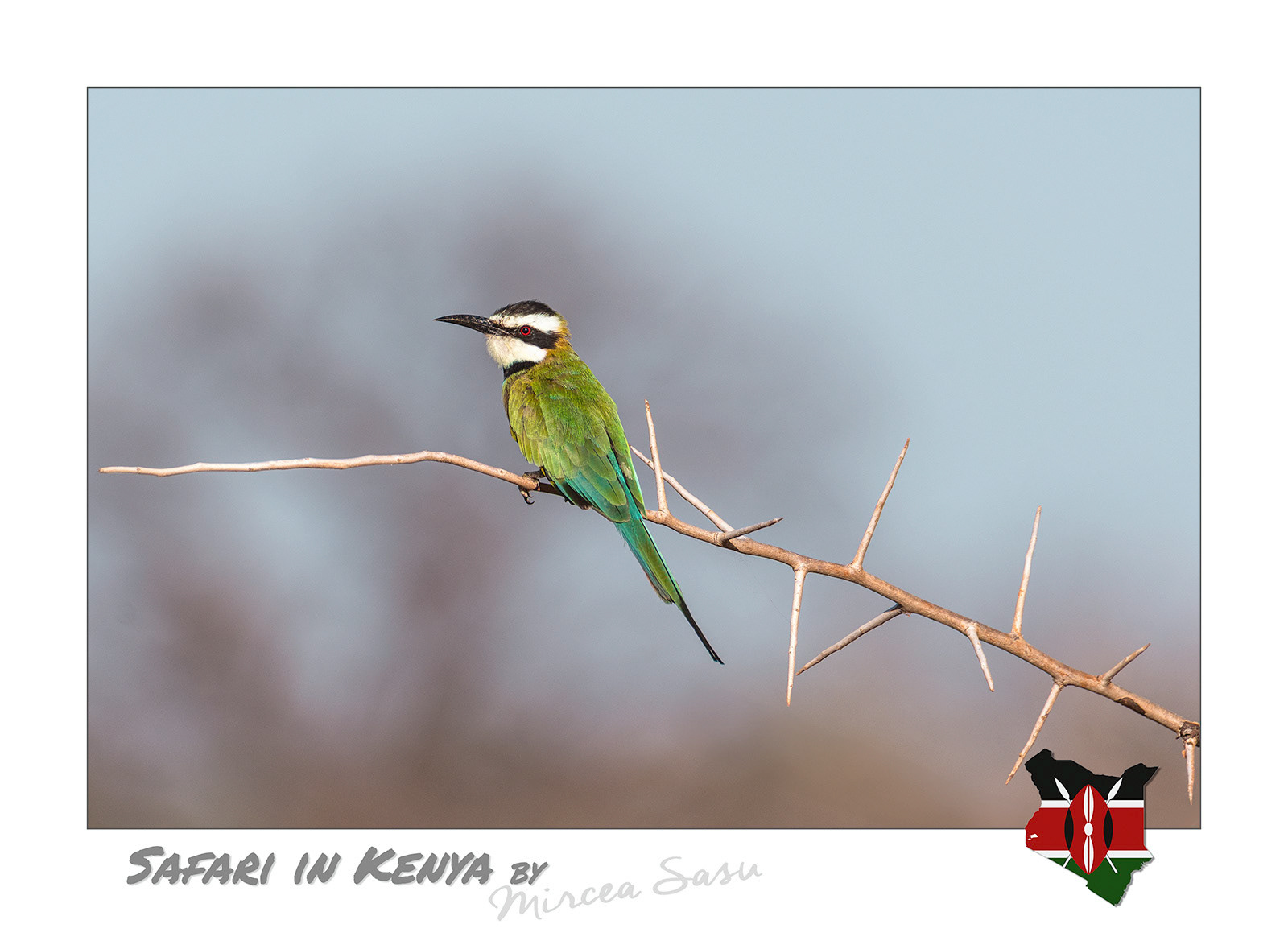
Kenya's avian fauna includes no fewer than 14 species of bee-eater, insectivorous birds of the Meropidae family. These are very agile, brightly colored fliers, which, in most cases, live in colonies and dig their nests in sandy or clay banks. By comparison, in Romania we have only one species of this family. white-throated bee-eater (Merops albicollis)
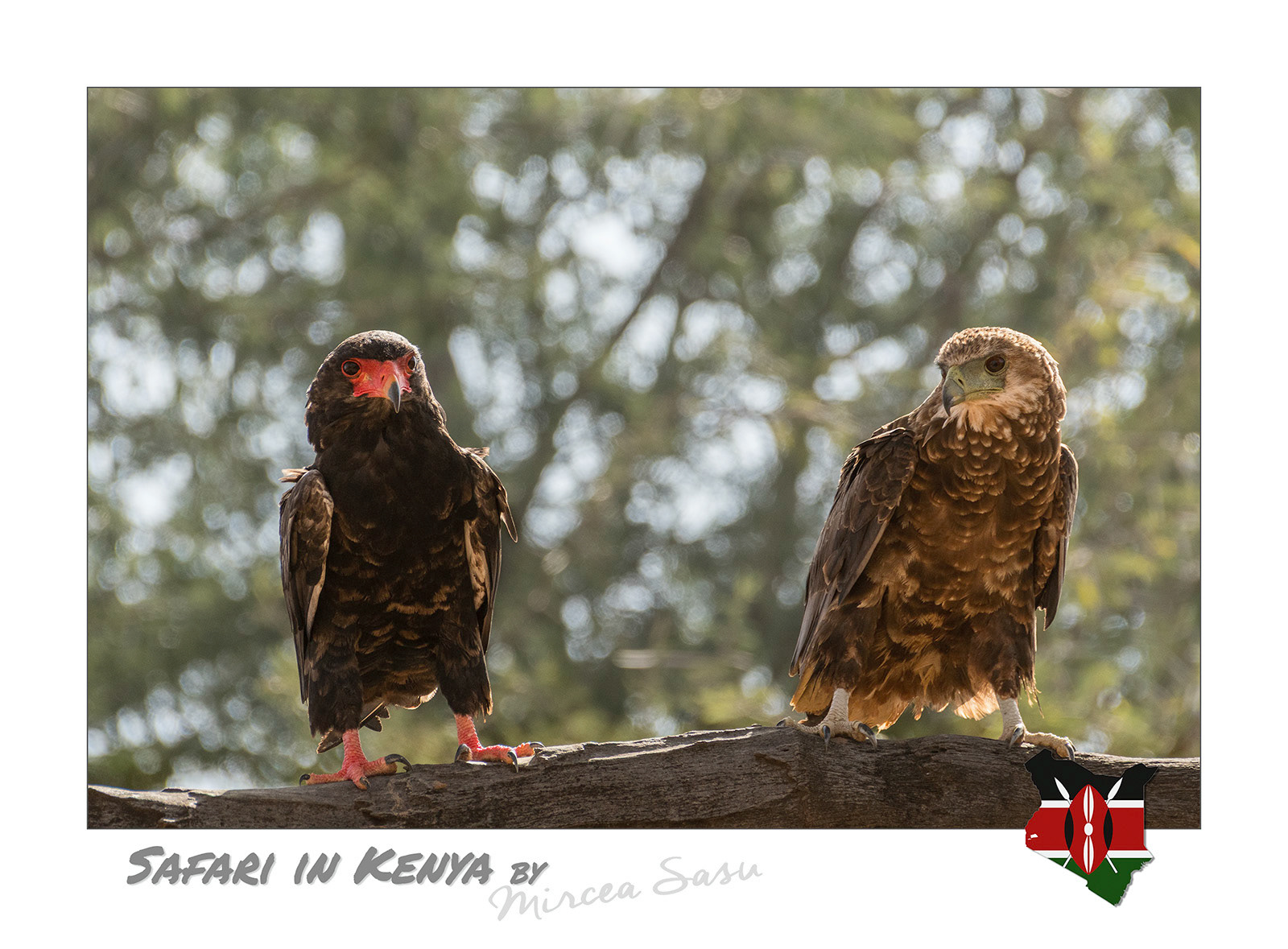
The word bateleur means acrobat, tightrope walker, in French and reflects the elaborate flying style of this species of bird of prey. It prefers open savannah areas, with tall trees, where it can hunt even medium-sized mammals. Adult specimens are easily recognized by their red cheeks and legs. bateleur (Terathopius ecaudatus) Buffalo Spring National Park
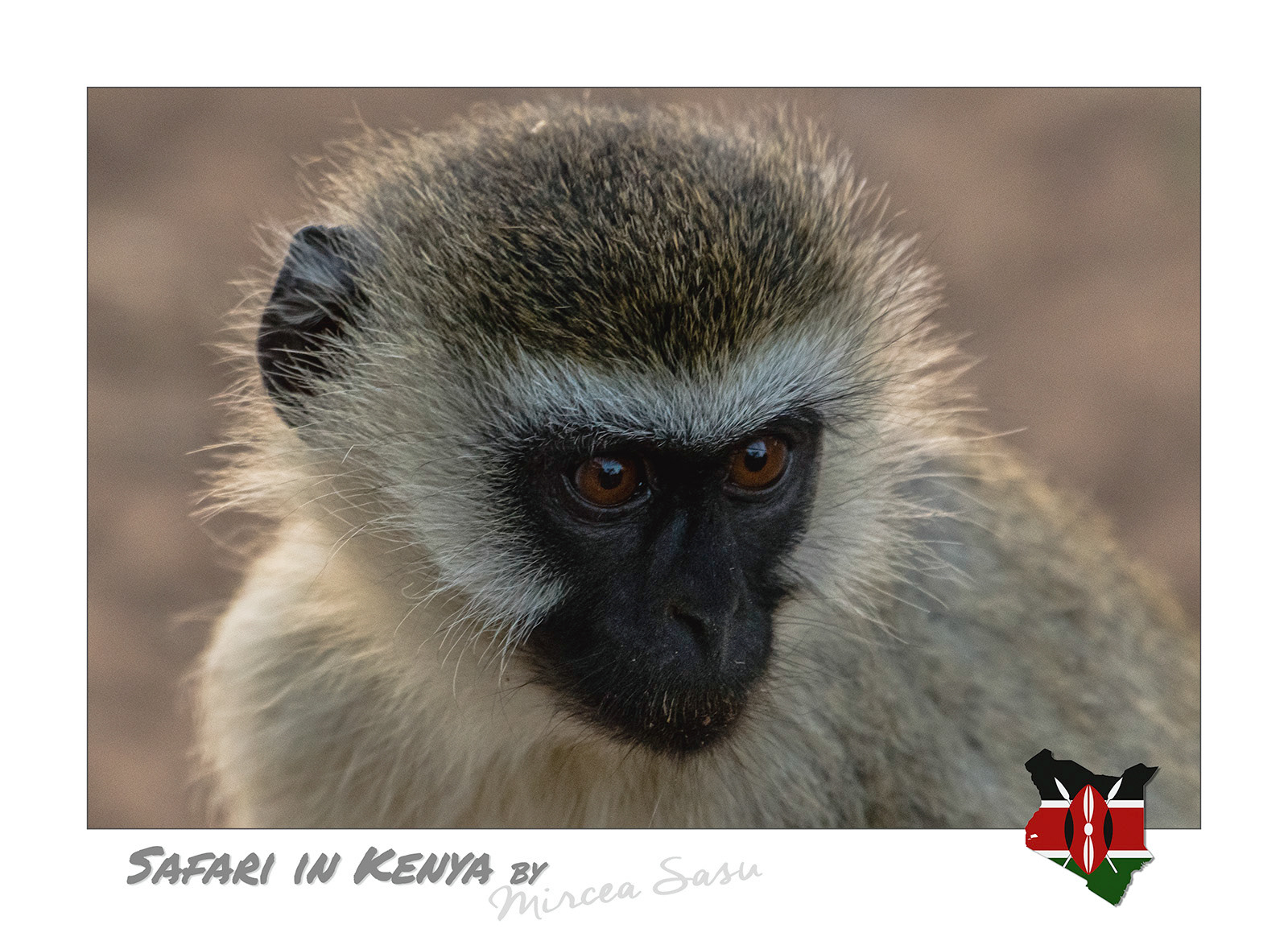
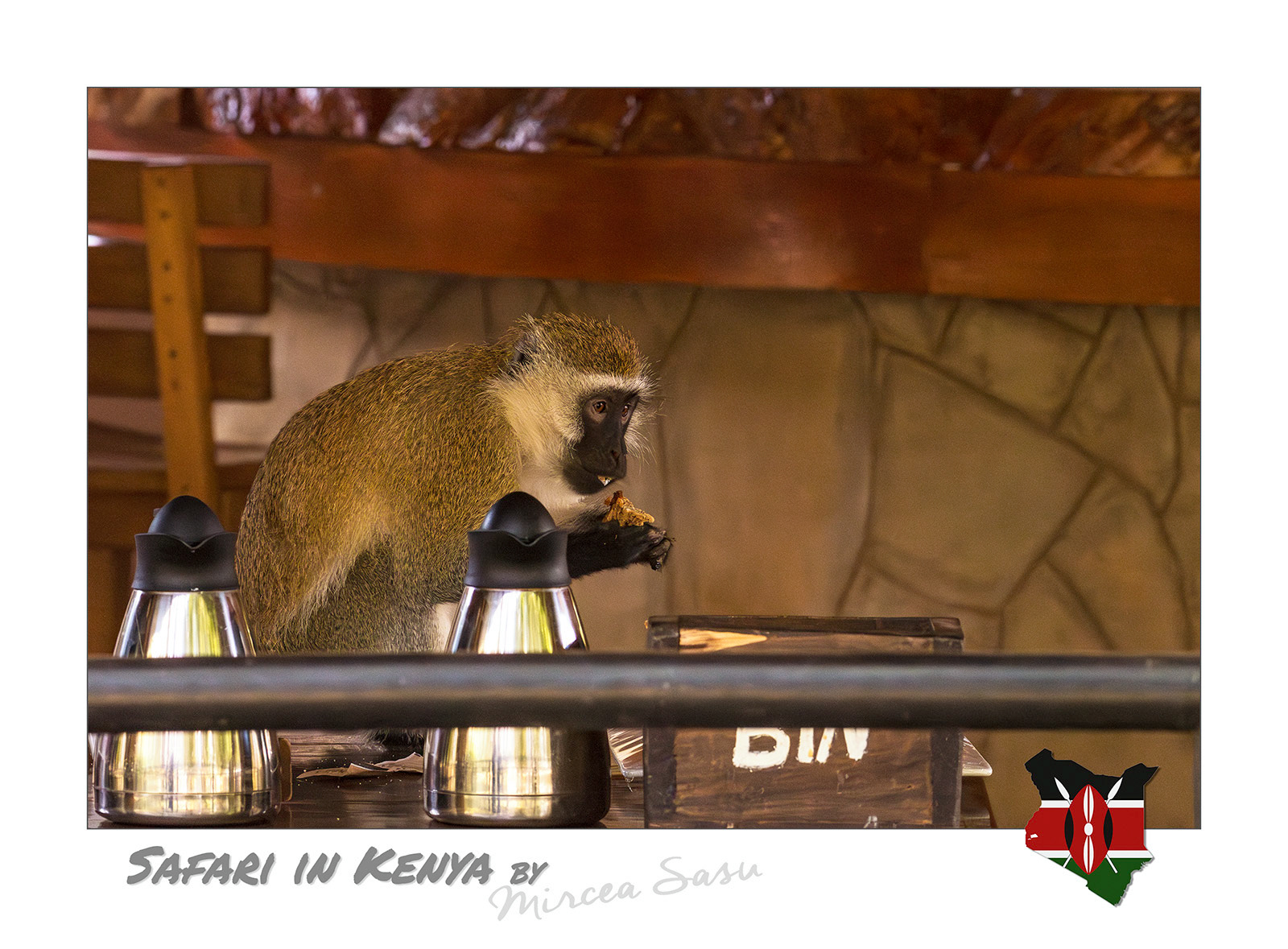
Social primates spread across much of sub-Saharian Africa, easy to recognize by their black faces, the vervet monkeys use a very complex communication system. They use sounds, named alarm calls, specific to different predators, like leopards, snakes or birds of prey, each triggering the appropriate escape strategy for their troop. vervet monkey (Chlorocebus pygerythrus) Buffalo Spring National Park
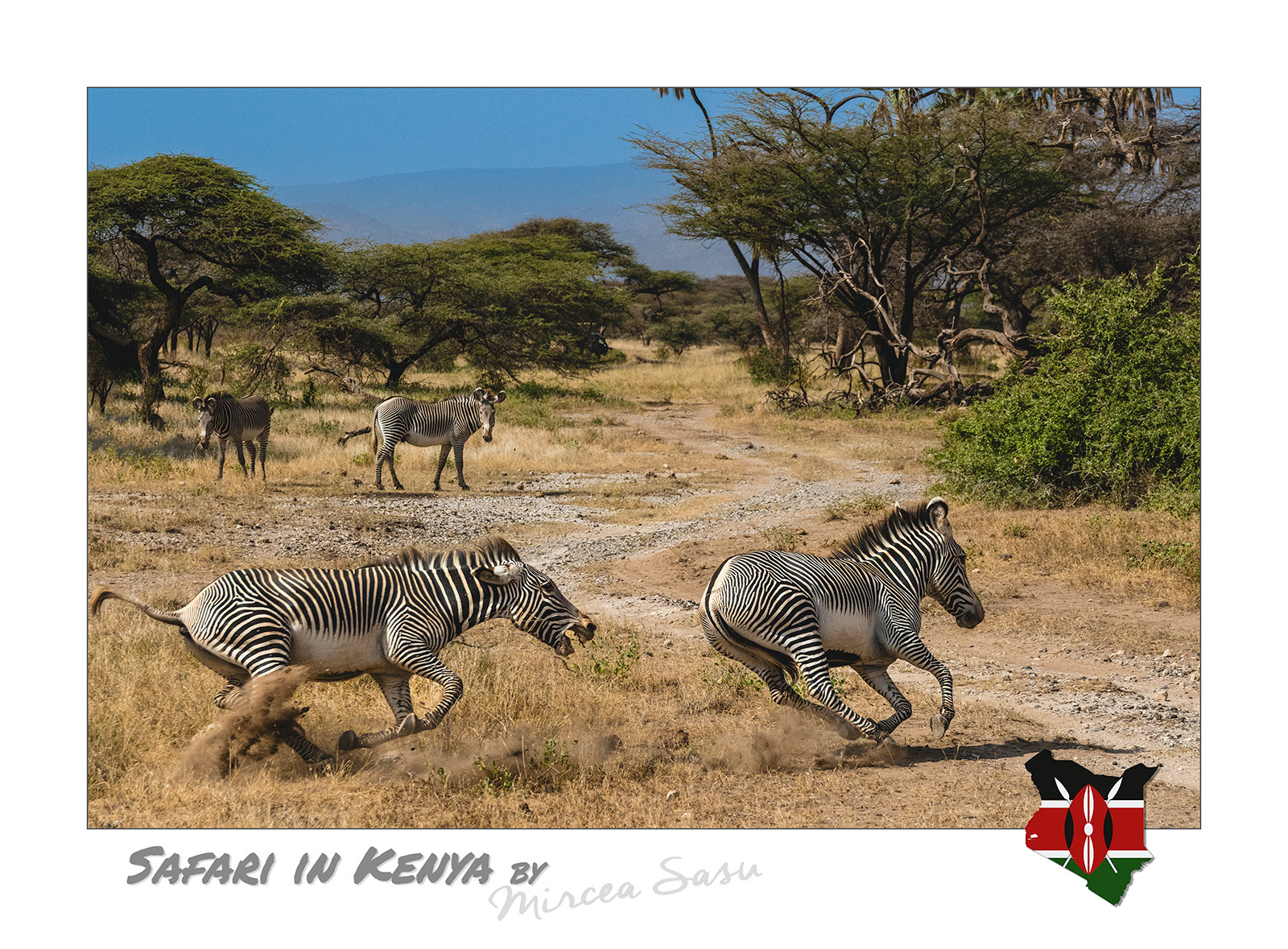
The largest of the three zebra species, the Grévy’s zebra is found in the arid grasslands of northern Kenya and in some parts of Ethiopia. It is easily recognizable by its very narrow strips, as well by its white belly and large ears. Grévy's zebra (Equus grevyi) Buffalo Spring National Park
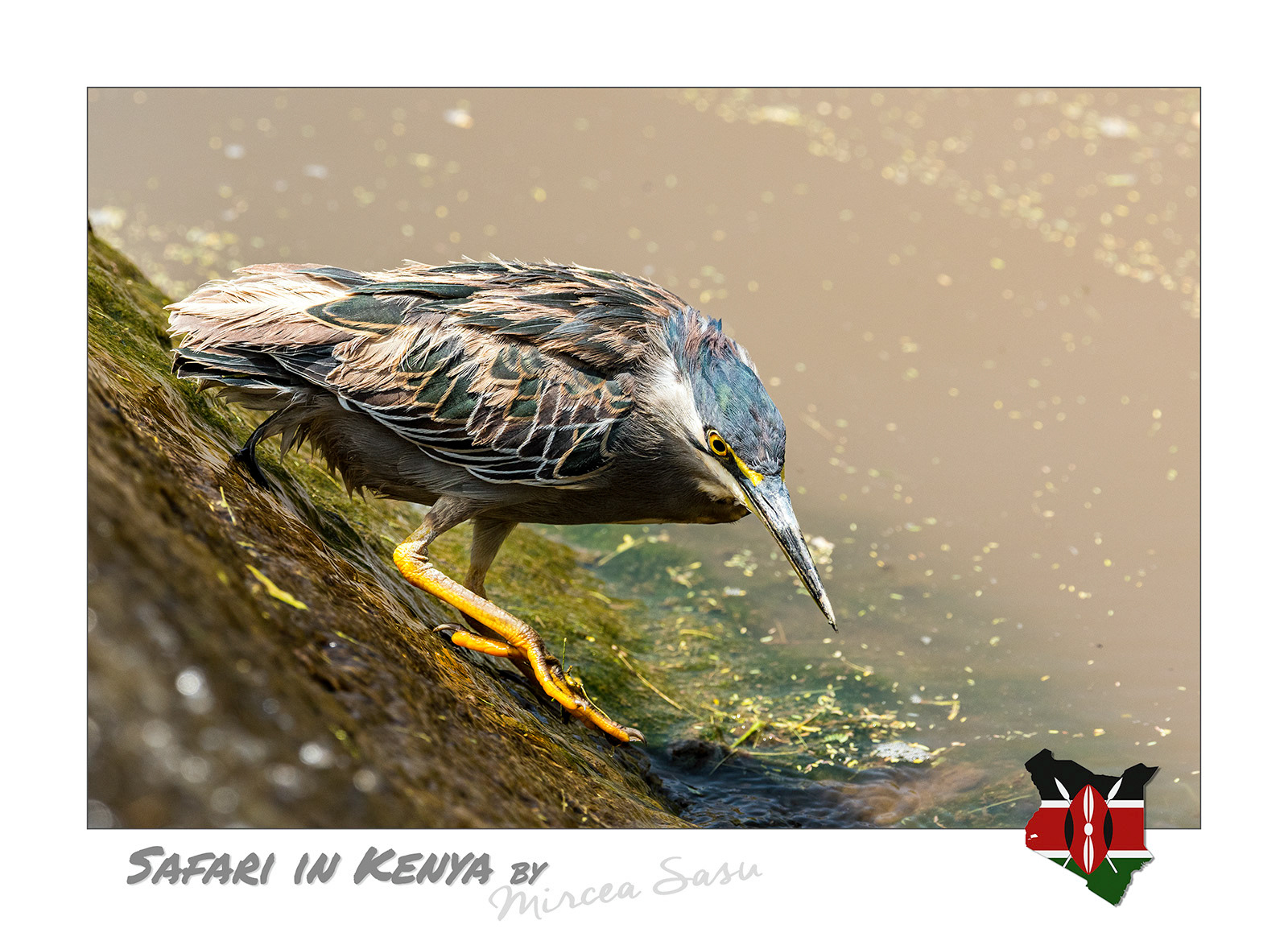
Most heron species are patient hunters, they can stand motionless for long periods of time on either river banks, partially submerged vegetation or even human made structures, waiting for the prey, mainly frogs, water insects or fish, to come in range to spear them with their long, pointed, beak. striated heron (Butorides striata) Buffalo Spring National Park
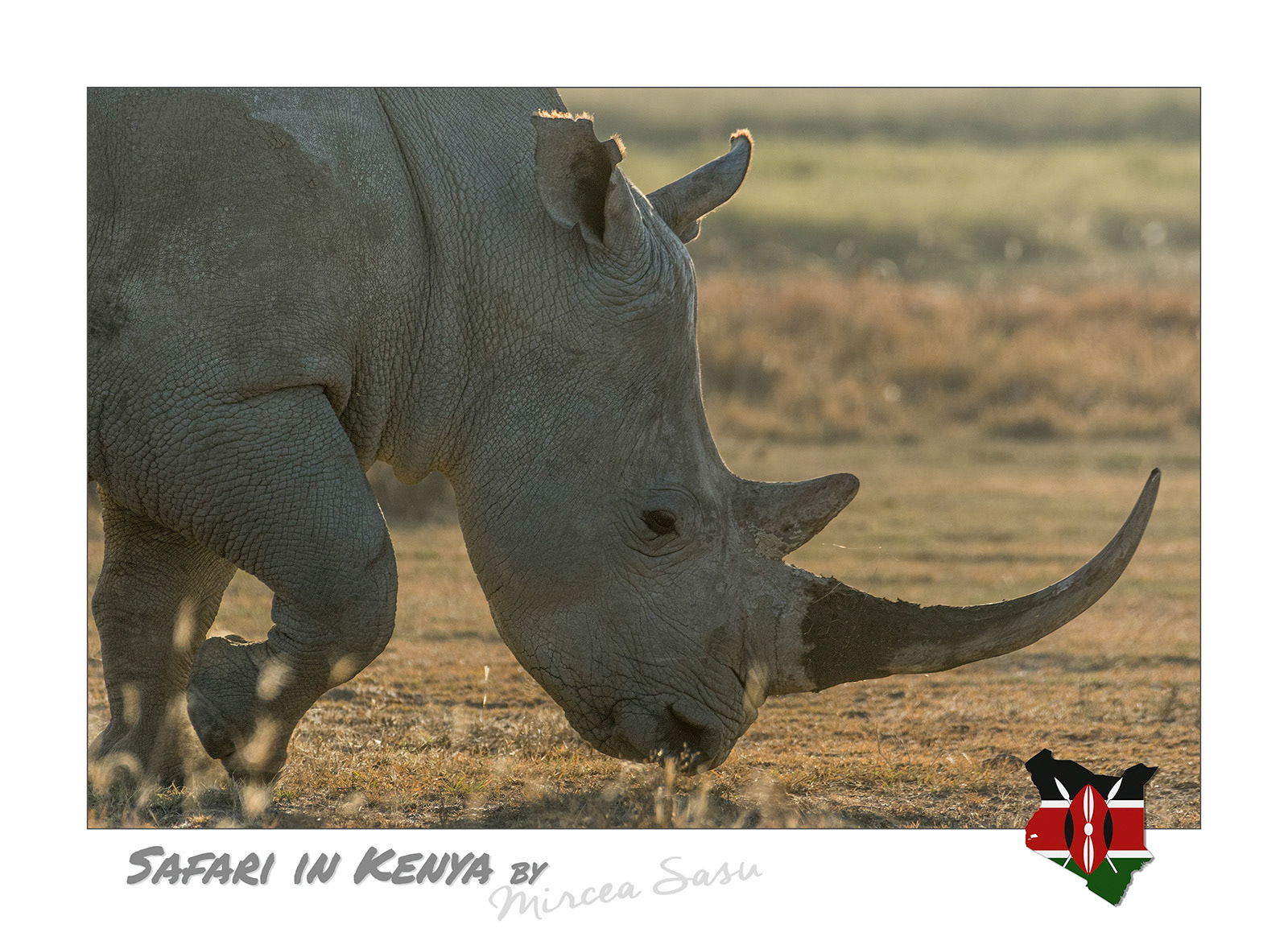
The white rhinoceros, the largest of the extant rhinoceros species, is distinguished from the black rhinoceros not by its color, but by the shape of its upper lip, which is broad, adapted for grazing on vegetation on the ground. In contrast, the black rhinoceros' one is sharp, beak-like, which allows it to feed on leaves and shoots from shrubs and other tall vegetation. white rhinoceros (Ceratotherium simum) Lake Nakuru National Park
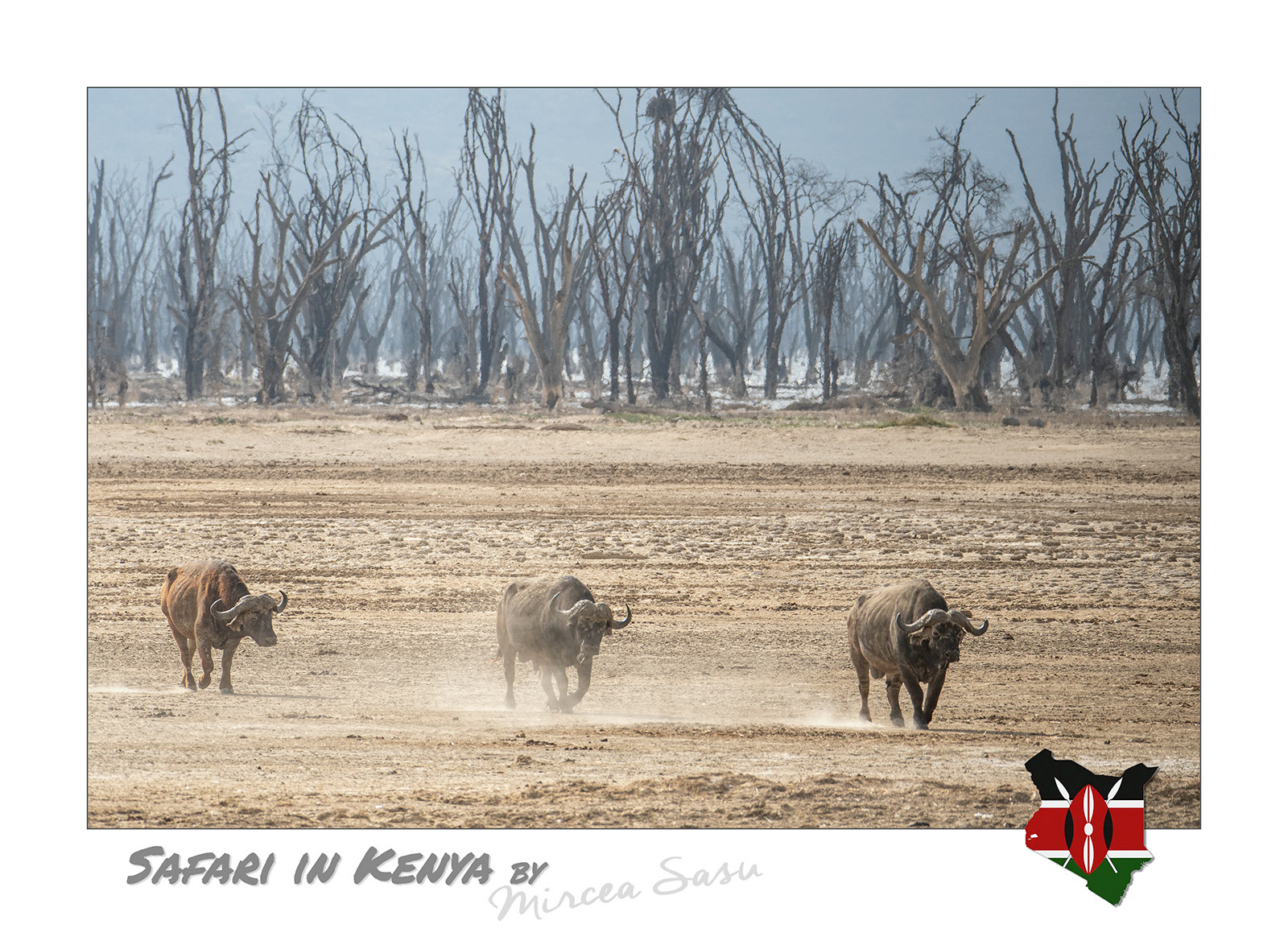
In the past 15 years, the water levels of Lake Nakuru, located in the middle of the national park with the same name, has risen significantly, so that its surface area has almost doubled, causing flooding of neighboring areas, including parts of Nakuru city. The dried trunks of trees destroyed by the alkaline water remain a visible testimony of its old banks. african buffalo (Syncerus caffer) Lake Nakuru National Park
Extremely opportunistic, the vervet monkeys and baboons have adapted to live in the vicinity of lodges in Kenyan national parks, where they take advantage of any food source and even do not hesitate to venture on robbery expeditions through tourists' rooms, if they are imprudent enough to leave their doors open. vervet monkey (Chlorocebus pygerythrus) Buffalo Spring National Park
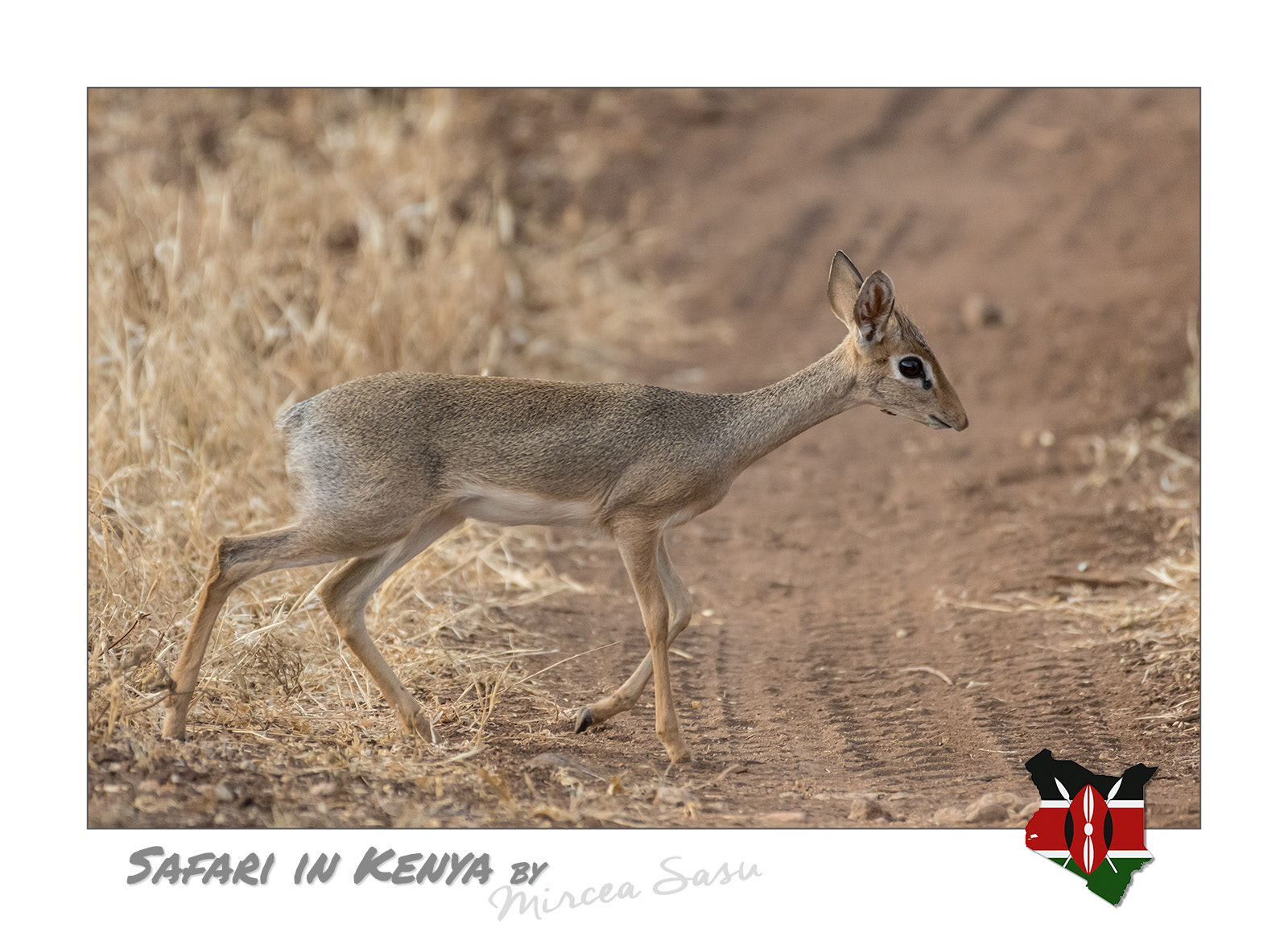
One of the smallest species of antelope, the dik-dik is only 30-40 centimeters tall and weighs a maximum of 7 kilograms. An interesting feature of this species is that it forms lifelong monogamous pairs, a very rare situation among antelopes. Despite their size, the pair is aggressively defending its territory from intruders. Kirk's dik-dik (Madoqua kirkii) Buffalo Spring National Park
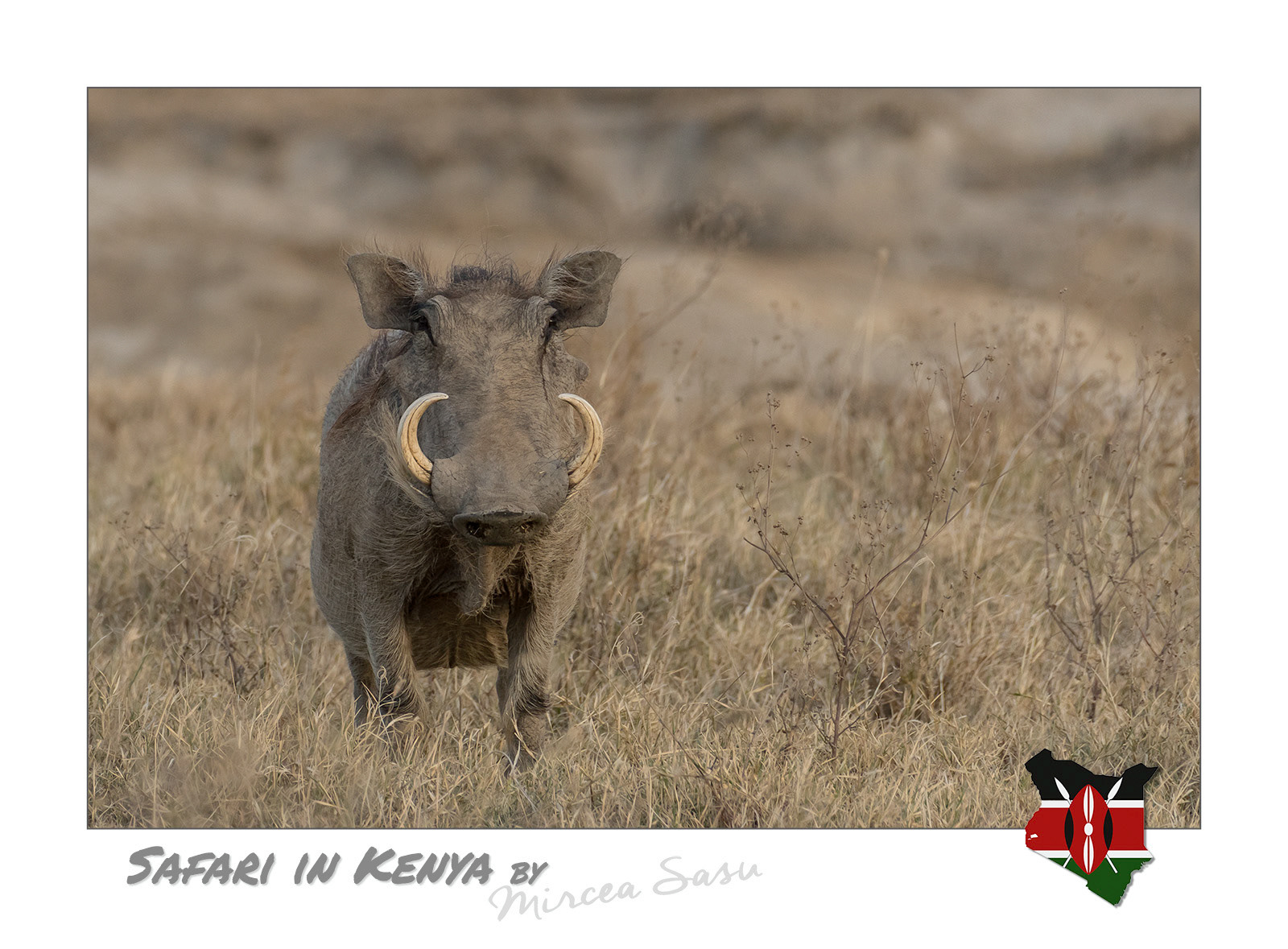
The animal that served as the inspiration for the well known Pumbaa from the story of The Lion King is the warthog, a genus of wild pigs widespread in the savannah areas of sub-Saharan Africa. warthog (Phacochoerus africanus) Buffalo Spring National Park
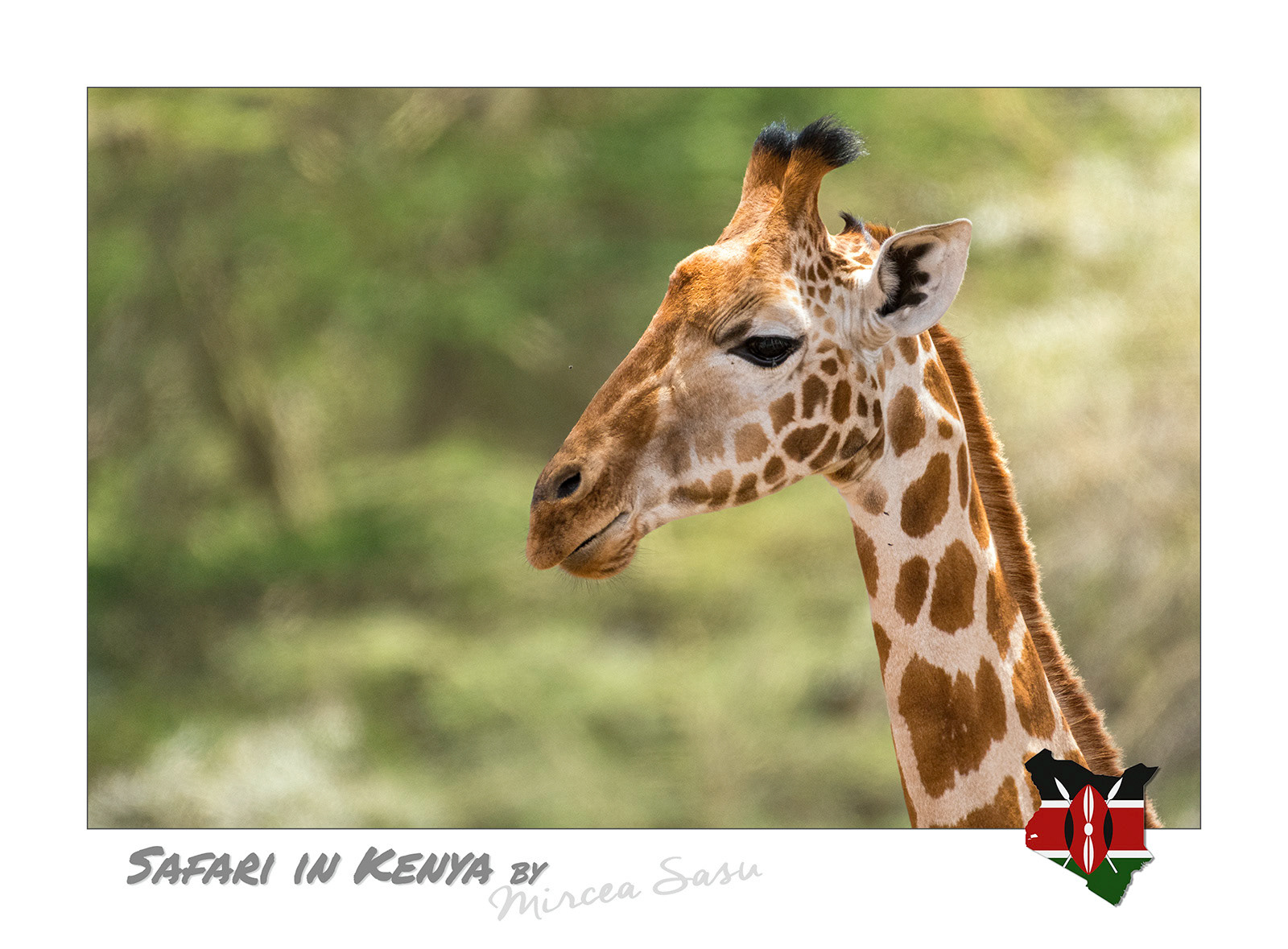
Despite the obvious difference in length, the giraffe's neck has seven cervical vertebrae, exactly the same number as the human neck. Rothschild's Giraffe (Giraffa camelopardalis rothschildii) Lake Nakuru National Park
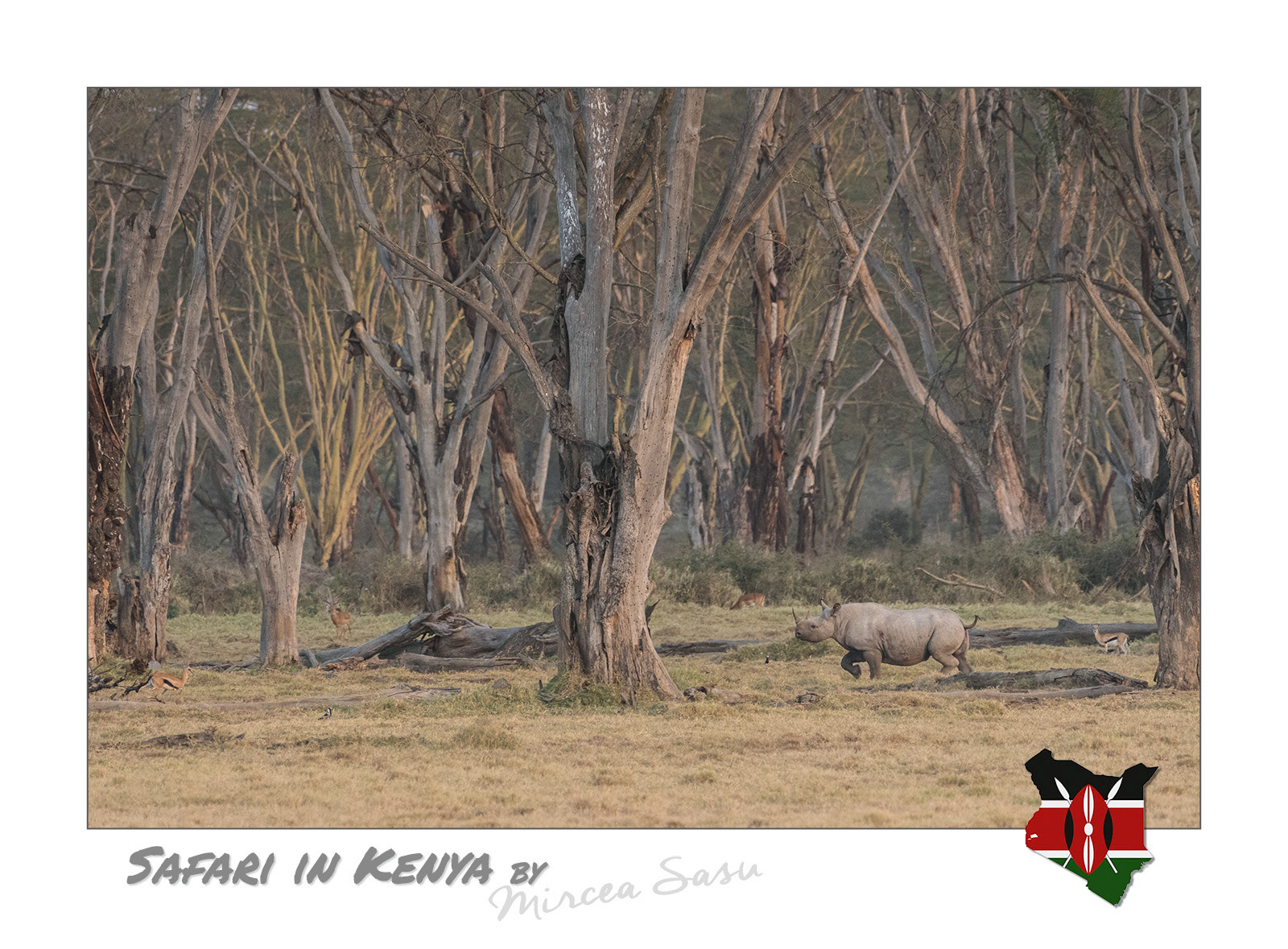
Although a massive, lumbering animal, the rhinoceros is capable of running very fast, reaching speeds of 55 km/h (34 mph), significantly faster than the fastest athlete. For comparison, the world record for the men's 100-meter dash is 37.58 km/h (23.35 mph). black rhinoceros (Diceros bicornis) Lake Nakuru National Park
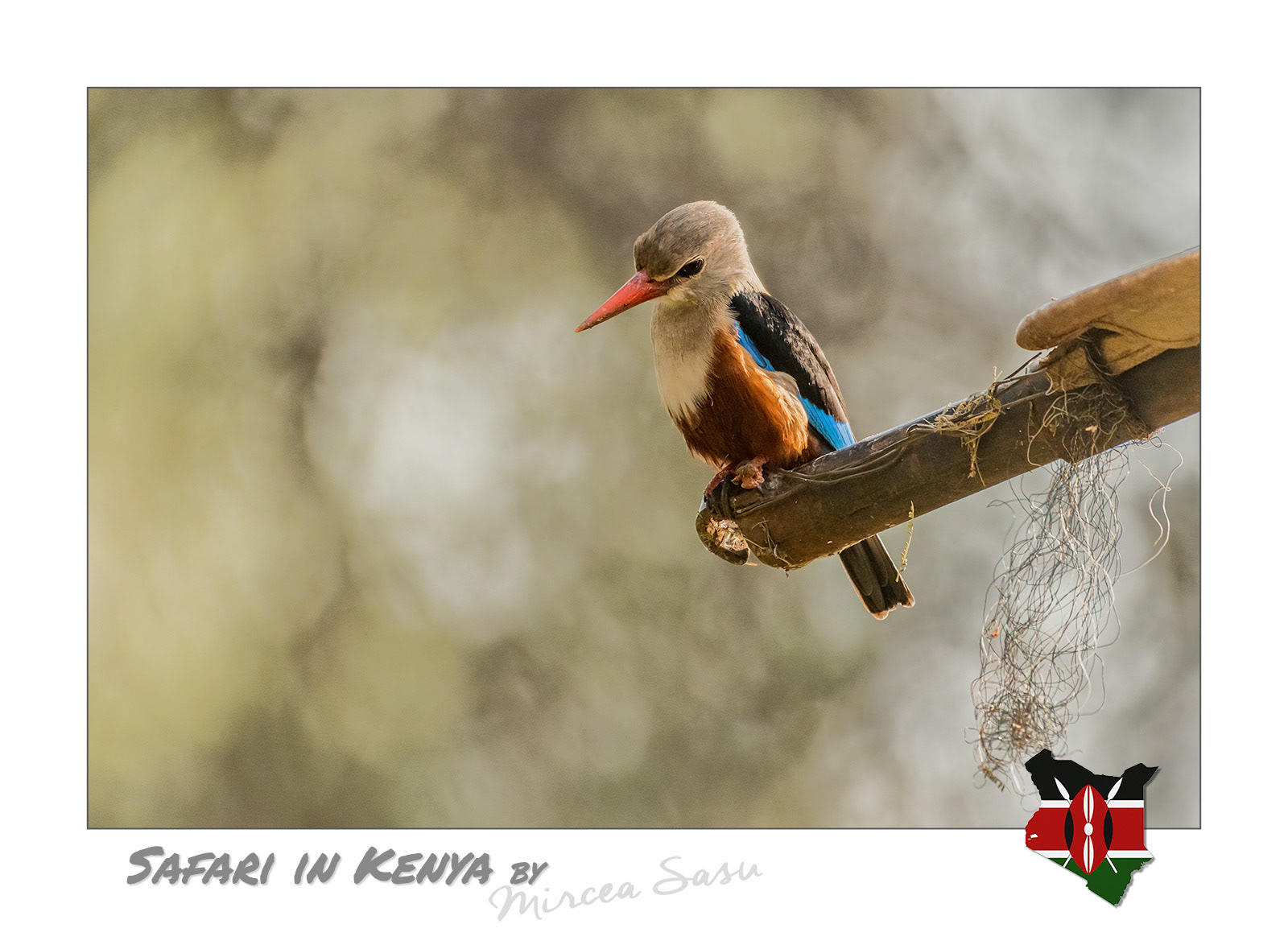
With many good elevated perches, poles, fences, or beams, and an abundance of insects, small lizards or frogs, the premises of the lodges from Kenyan natural parks are ideal hunting grounds for some species of kingfishers. grey-headed kingfisher (Halcyon leucocephala) Buffalo Spring National Park
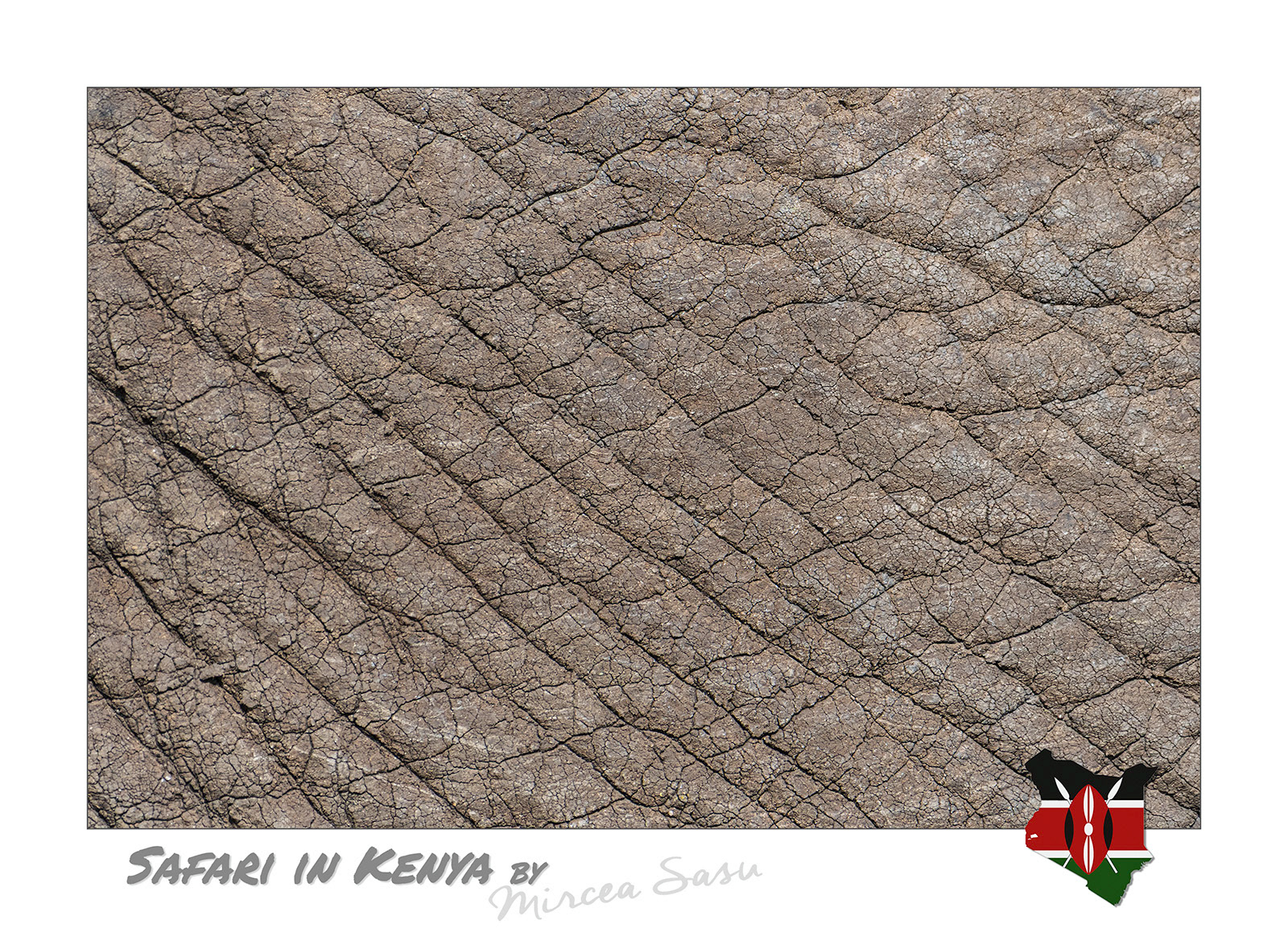
The skin of an African elephant can weigh up to 900 kilograms (2 000 pounds) and is up to a 2.5 cm (1 inch) thickness in some areas. The network of cracks visible on the surface serves for water retention, which, through slow evaporation, helps regulate its body temperature. african elephant (Loxodonta africana) Buffalo Spring National Park
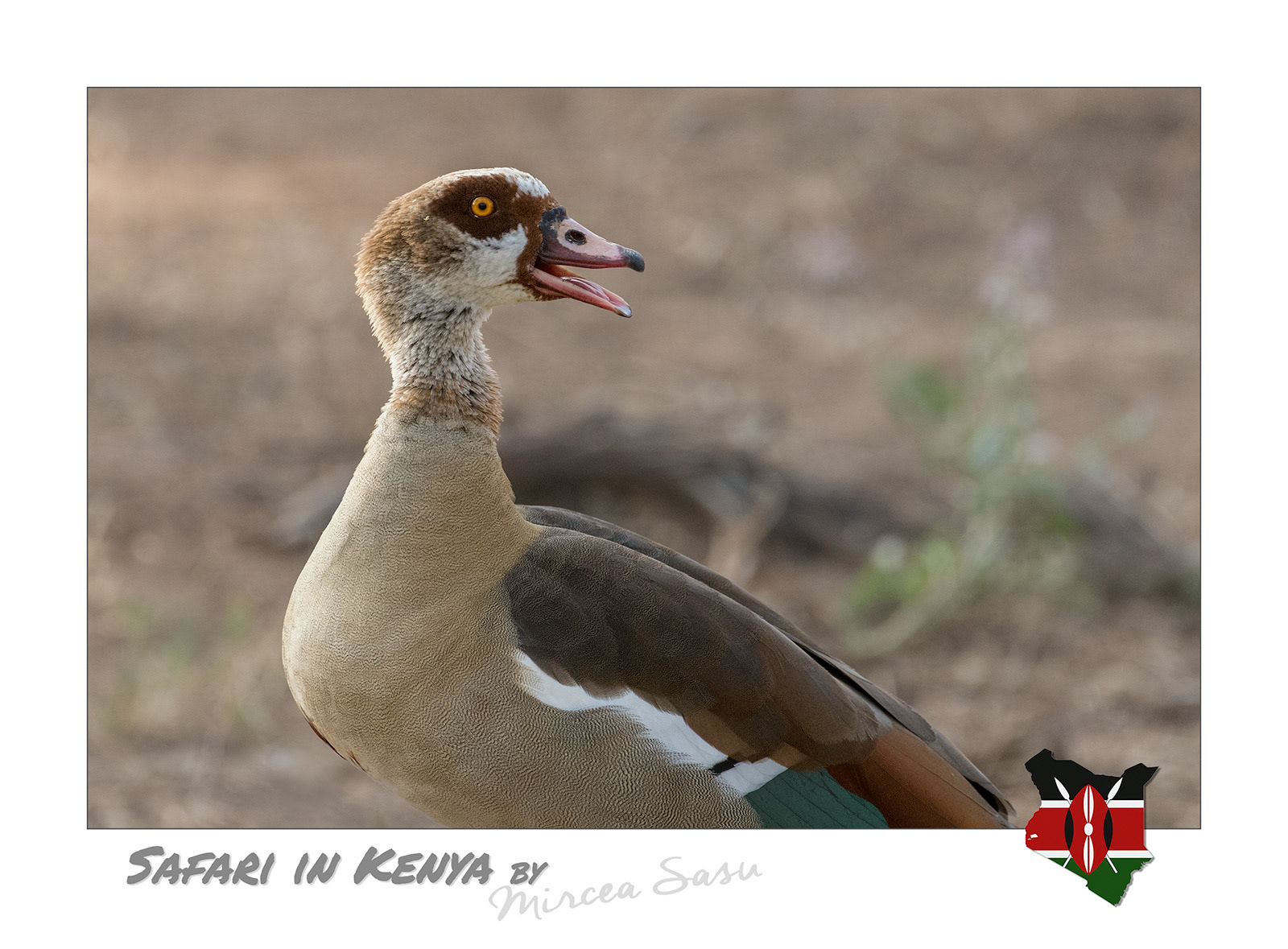
Native to the Nile Valley and sub-Saharan Africa, the Egyptian goose was introduced in Europe as an ornamental species. Escaped specimens found favorable conditions here, establishing populations that compete for resources and hybridize with native species, so it is now declared invasive in western Europe. Egyptian goose (Alopochen aegyptiaca) Buffalo Spring National Park
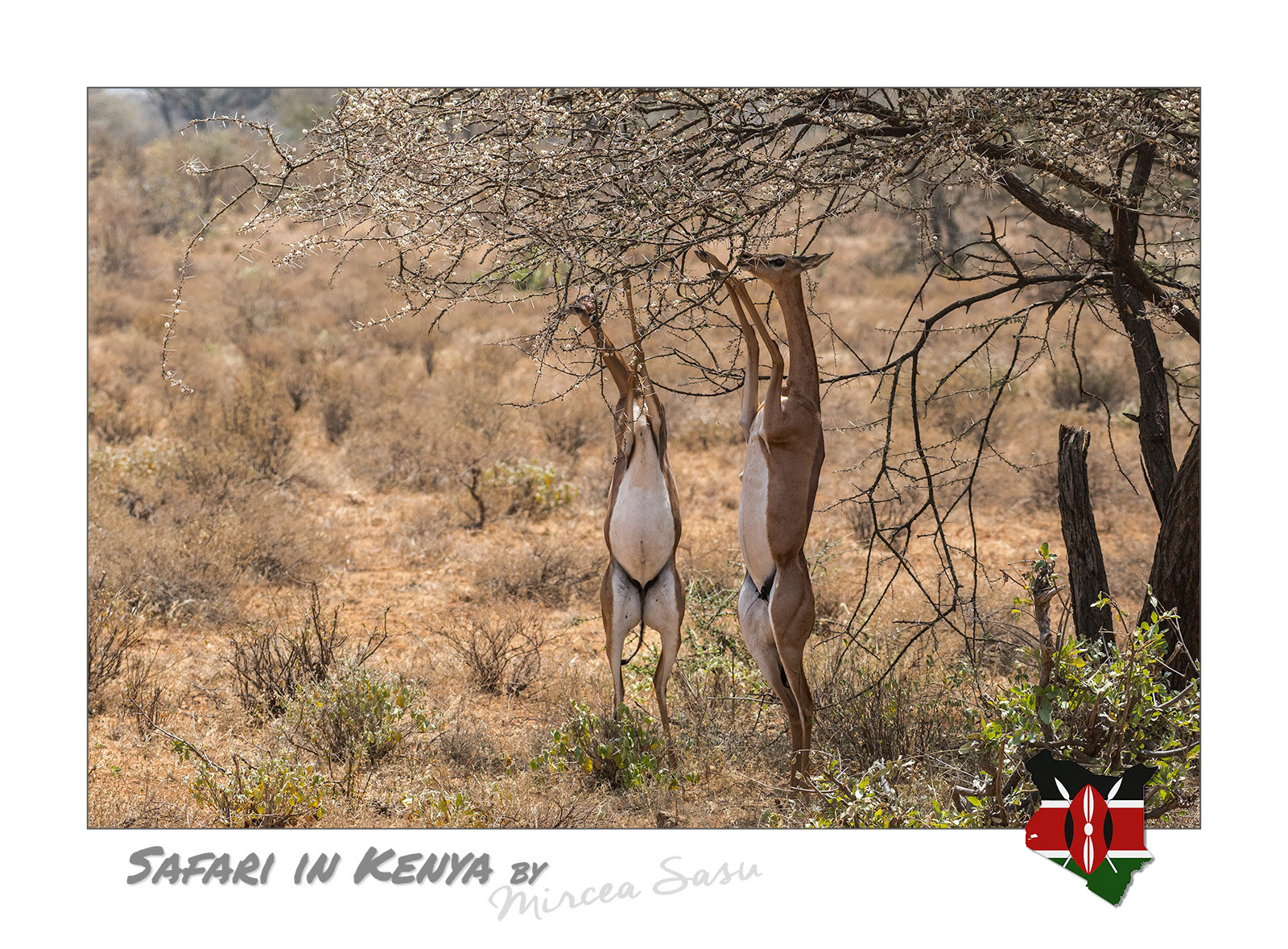
The gerenuk, the giraffe gazelle, is a medium-sized antelope species, easily recognizable by its long, slender neck and long legs. These characteristics, as well as its ability to stand on its hind legs, allow it to reach branches and leaves inaccessible to other herbivore species, which it extracts from the thorns with the help of its sharp snout. gerenuk (Litocranius walleri) Buffalo Spring National Park
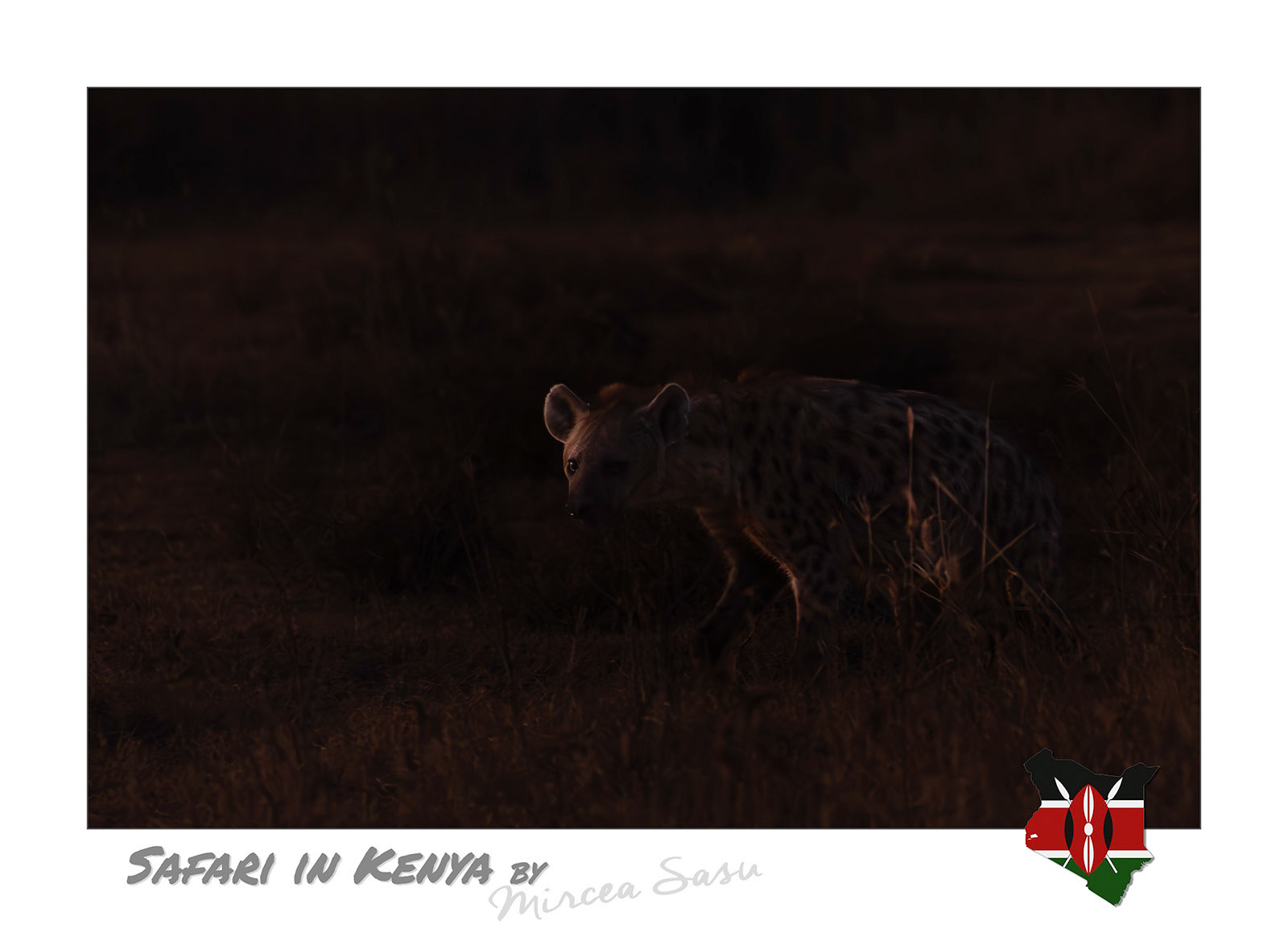
The spotted hyenas live in clans led by a dominant female, with an extremely complex social structure. Although the descendants of the dominant female generally inherit her position, gaining and maintaining leadership of the clan is the result of an elaborate policy of intrigue and alliances. spotted hyena (Crocuta crocuta) Lake Nakuru National Park
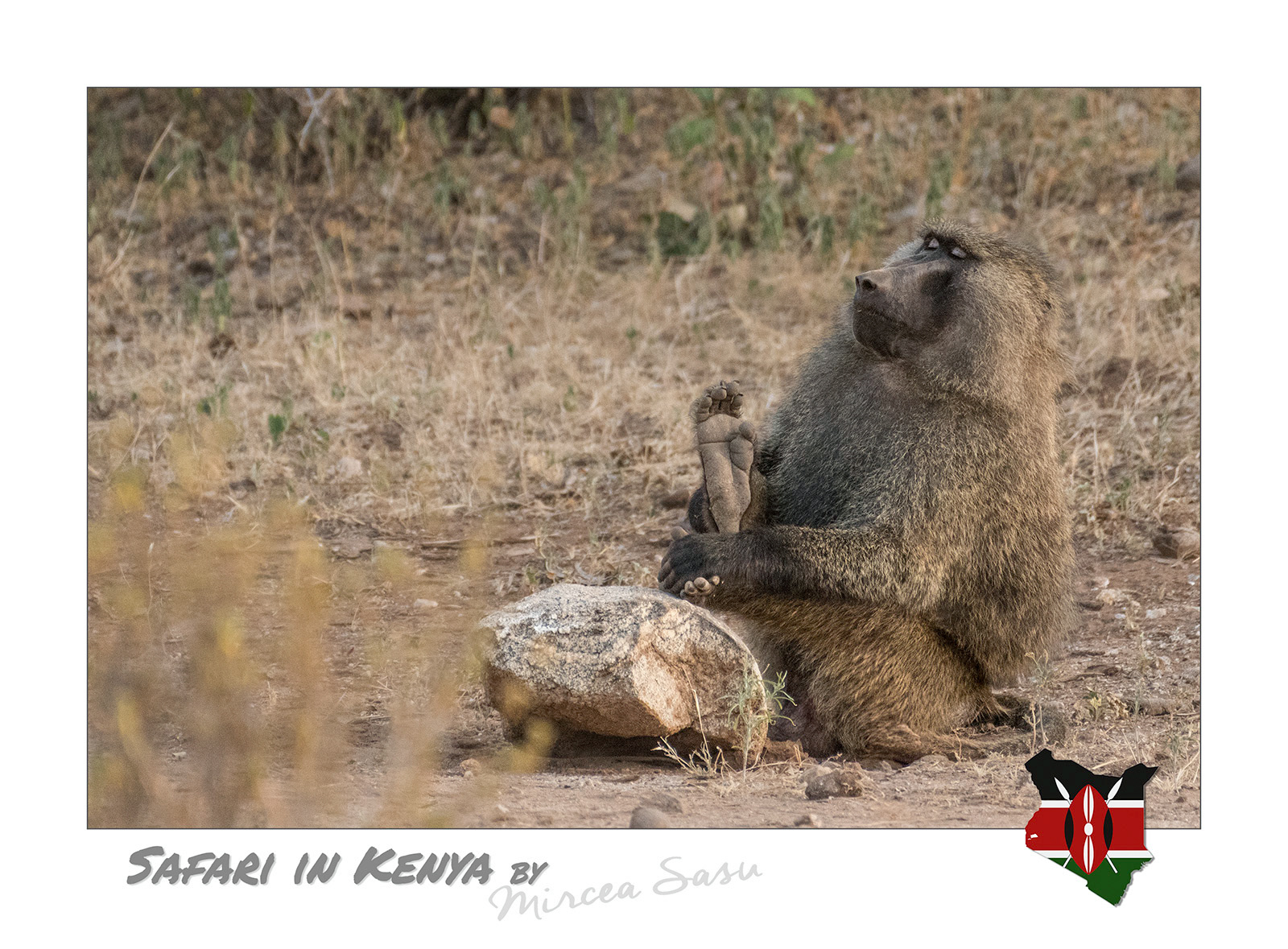
In ancient Egypt the baboons were considered sacred animals, the representations of Thoth, the god of the Moon, wisdom, science, magic, art and hieroglyphs. Interesting to mention that these animals were not native to Egypt, they were actually imported from other zones of Africa and breed in captivity. olive baboon (Papio anubis) Buffalo Spring National Park
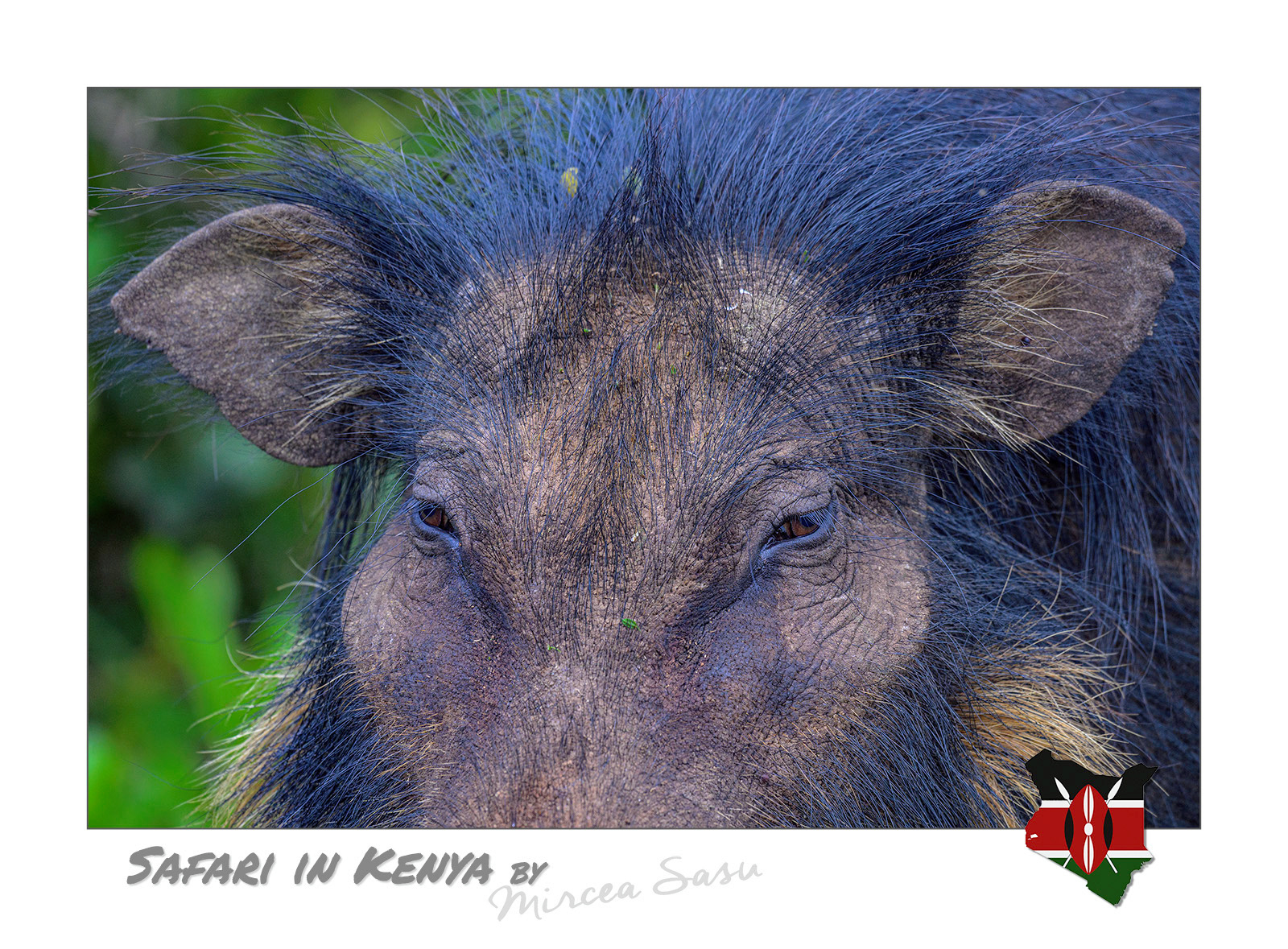
The giant forest hog is the largest species of wild pig, a robust animal with a massive head and long tusks, which can weigh up to 275 kg (600lb). Despite these imposing characteristics, it is a very shy animal that wasn’t scientifically classified until 1904. giant forest hog (Hylochoerus meinertzhageni) Aberdare National Park, Kenya
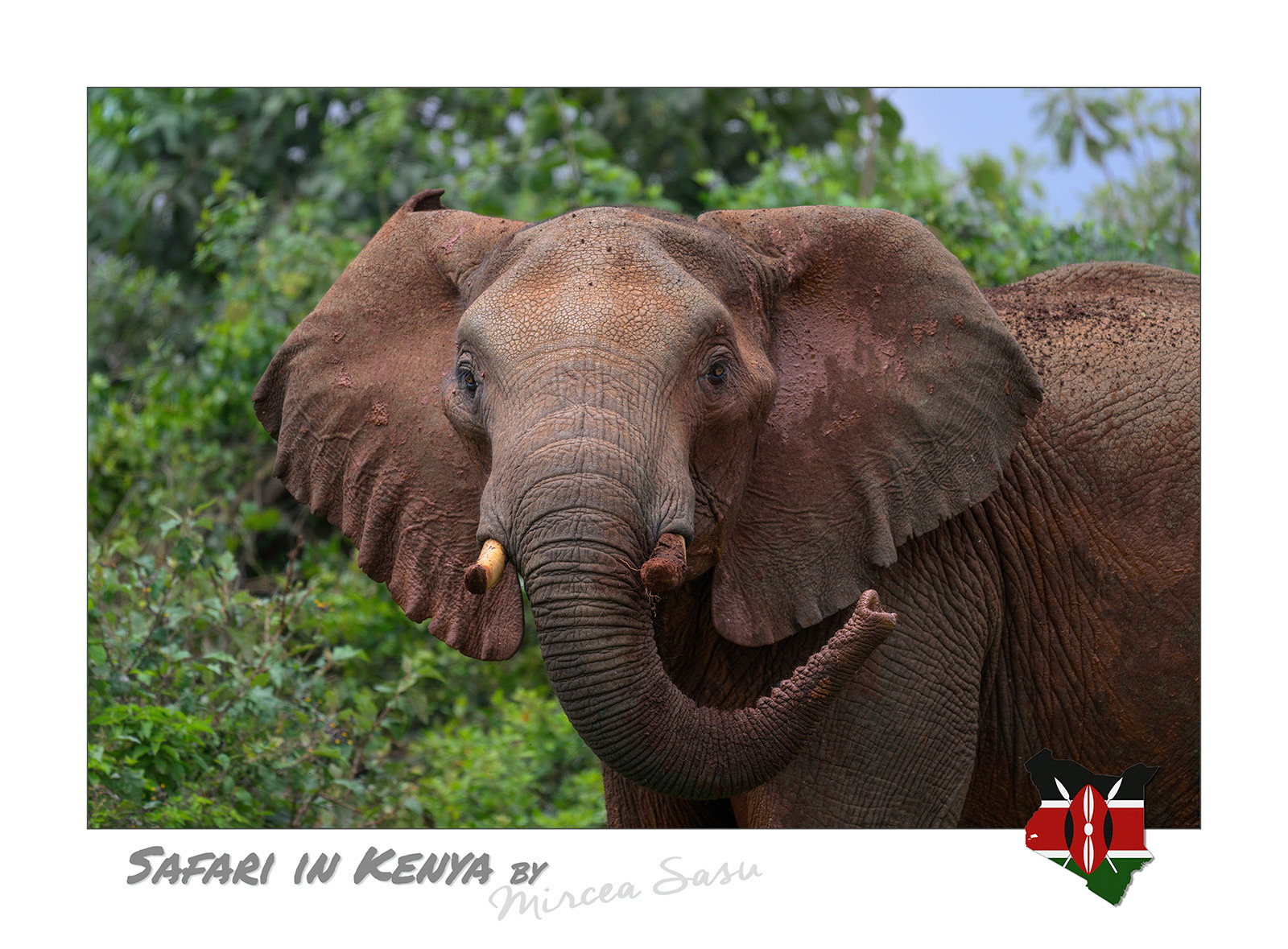
In Kenya's national parks, animals have always the right of way when crossing access roads, while the visitors are prohibited from getting out of vehicles or driving off-road. All of these measures are intended to protect both the wildlife, as well the visitors. african elephant (Loxodonta africana) Aberdare National Park, Kenya
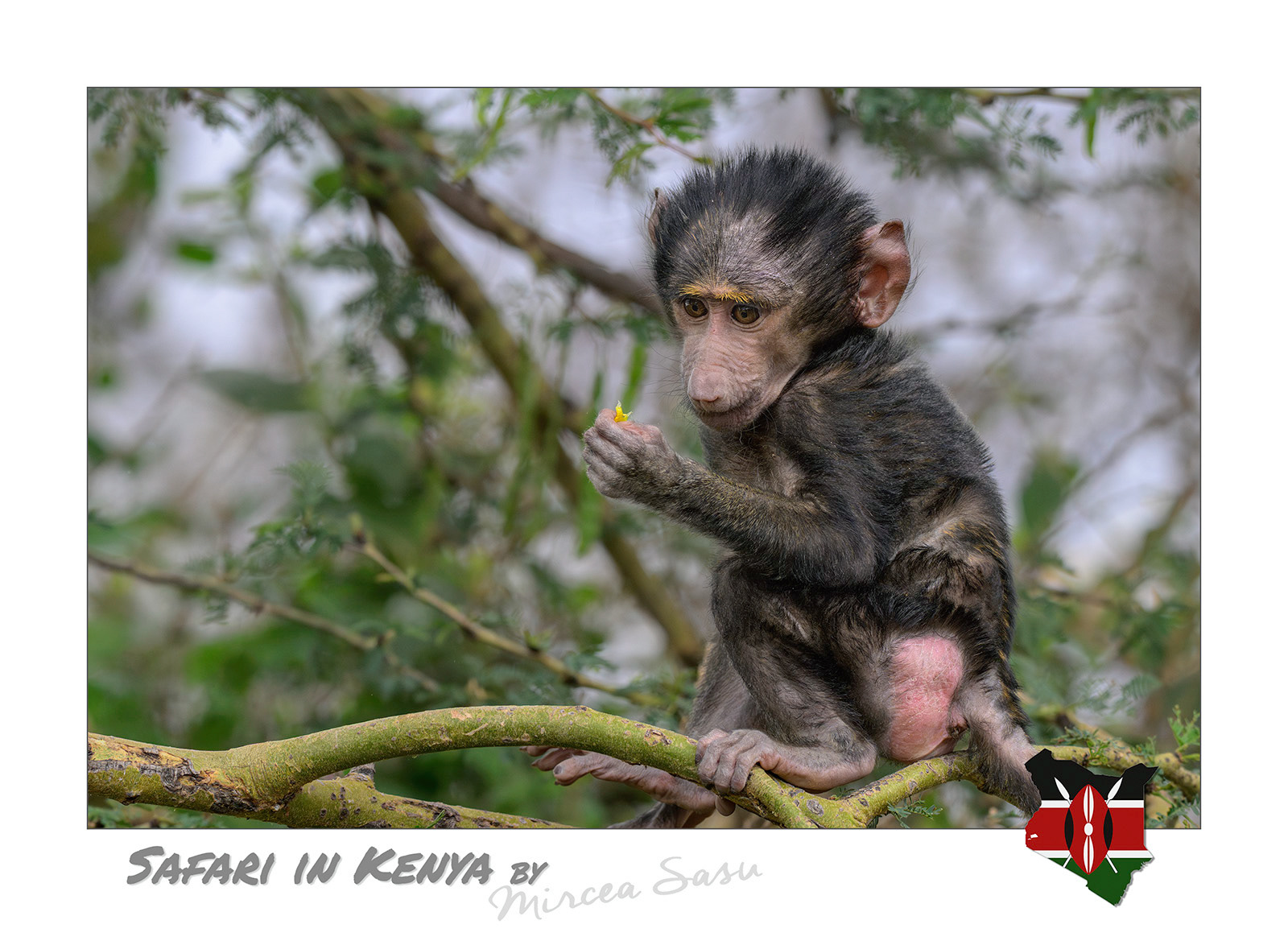
Monkey babies are constantly exploring their environment and testing their limits within the group, with each exploration or interaction representing a practical lesson that helps them acquire essential skills about food, dangers, and social hierarchy. olive baboon (Papio anubis) Lake Nakuru National Park, Kenya
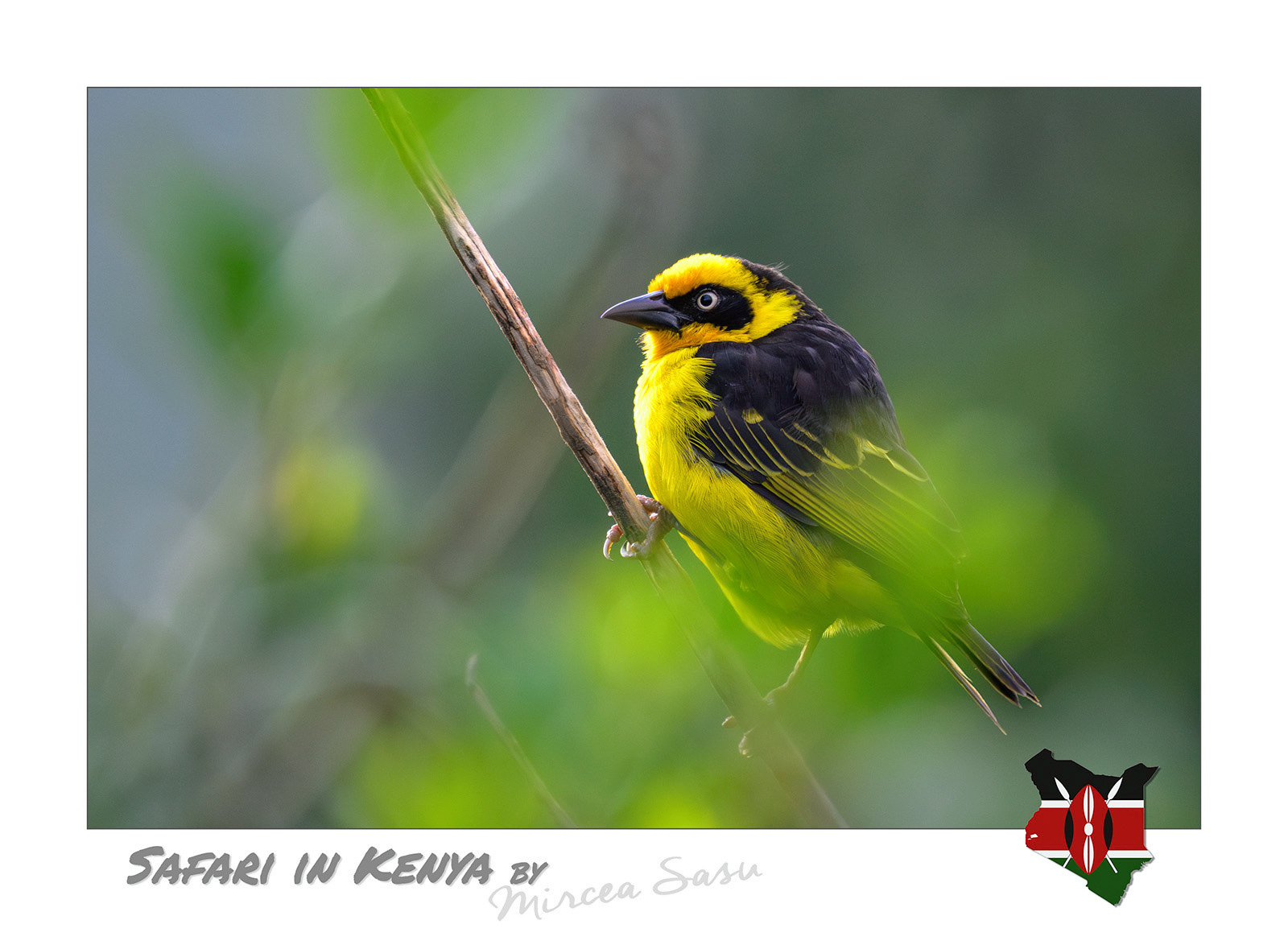
On the African continent, there are over 100 species of weaver birds. These are building intricate nests from grass, plant fibers or strips of bark, which they weave together with their beaks. Although it is not related to them, in Romania live a species of bird, the Eurasian penduline tit, which builds its nest by felting plant fibers and cattail or poplar fluff. baglafecht weaver (Ploceus baglafecht) Aberdare National Park, Kenya
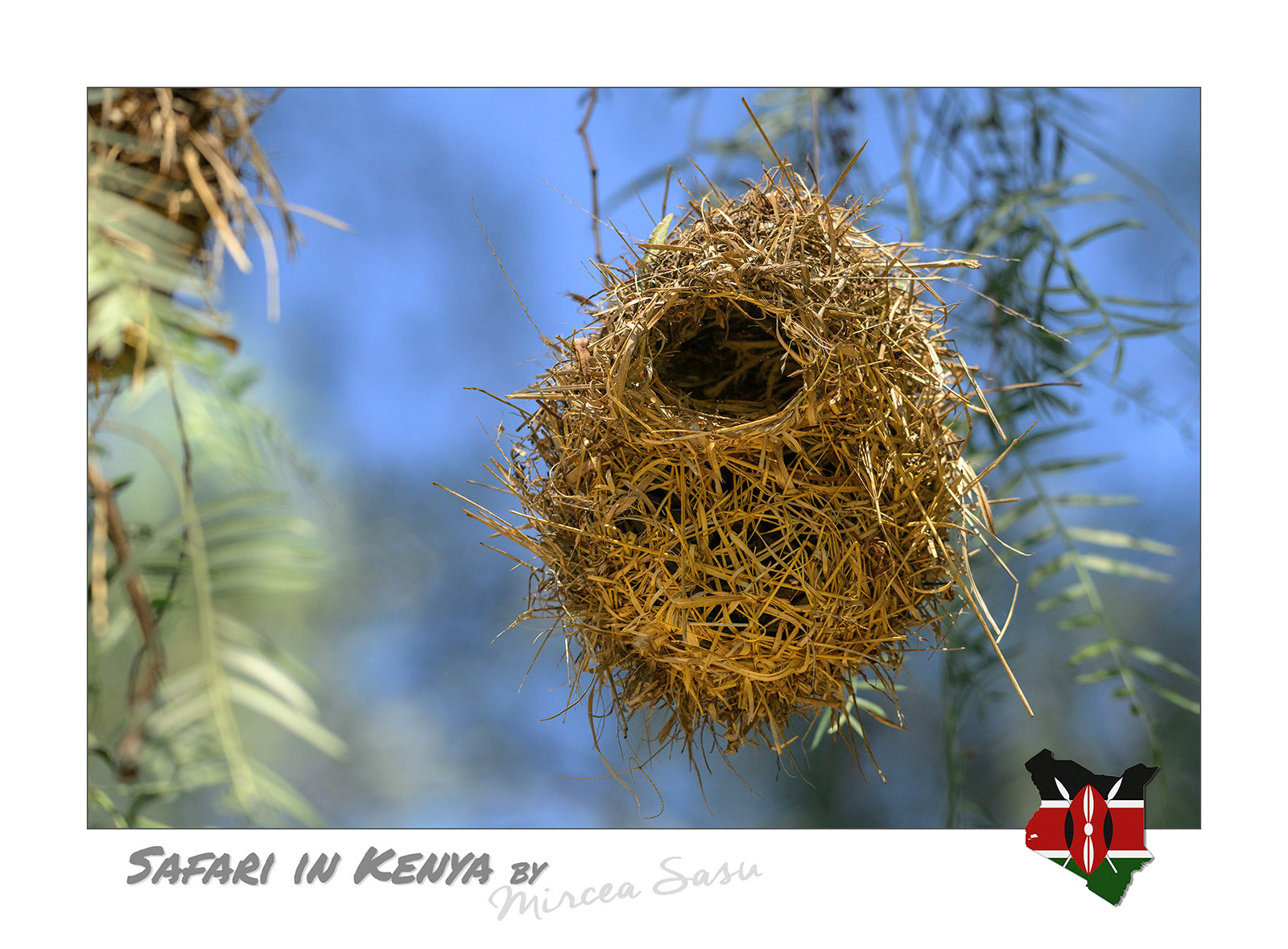
The nests of weaver birds came in various designs, from looser structures to elaborated ones and even communal structures that host hundreds of birds. Their construction technique, shape and entrance placement is so characteristic that experts can identify the species building them only by these criteria. weaver bird nest Lake Nakuru National Park, Kenya
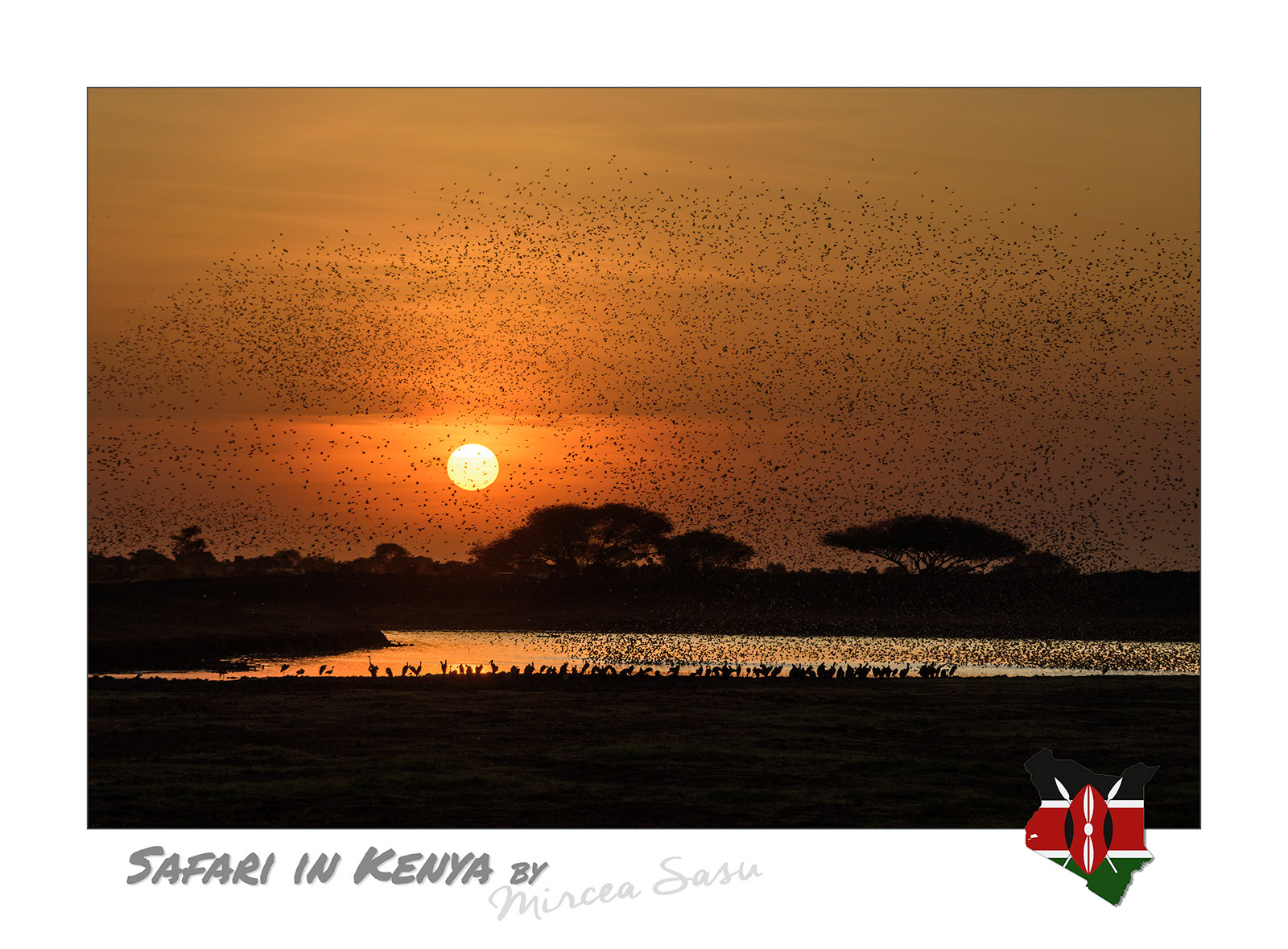
The red-billed quelea, a species of weaver bird, is considered to be the most numerous bird species in the world, with an estimated total population of 2 billions. They usually gather in flocks that can exceed several million individuals; this is also a form of defense, as predators cannot effectively track a single bird and are confused by the chaotic movement of the flock. red billed quelea (Quelea quelea) Tsavo East National Park, Kenya
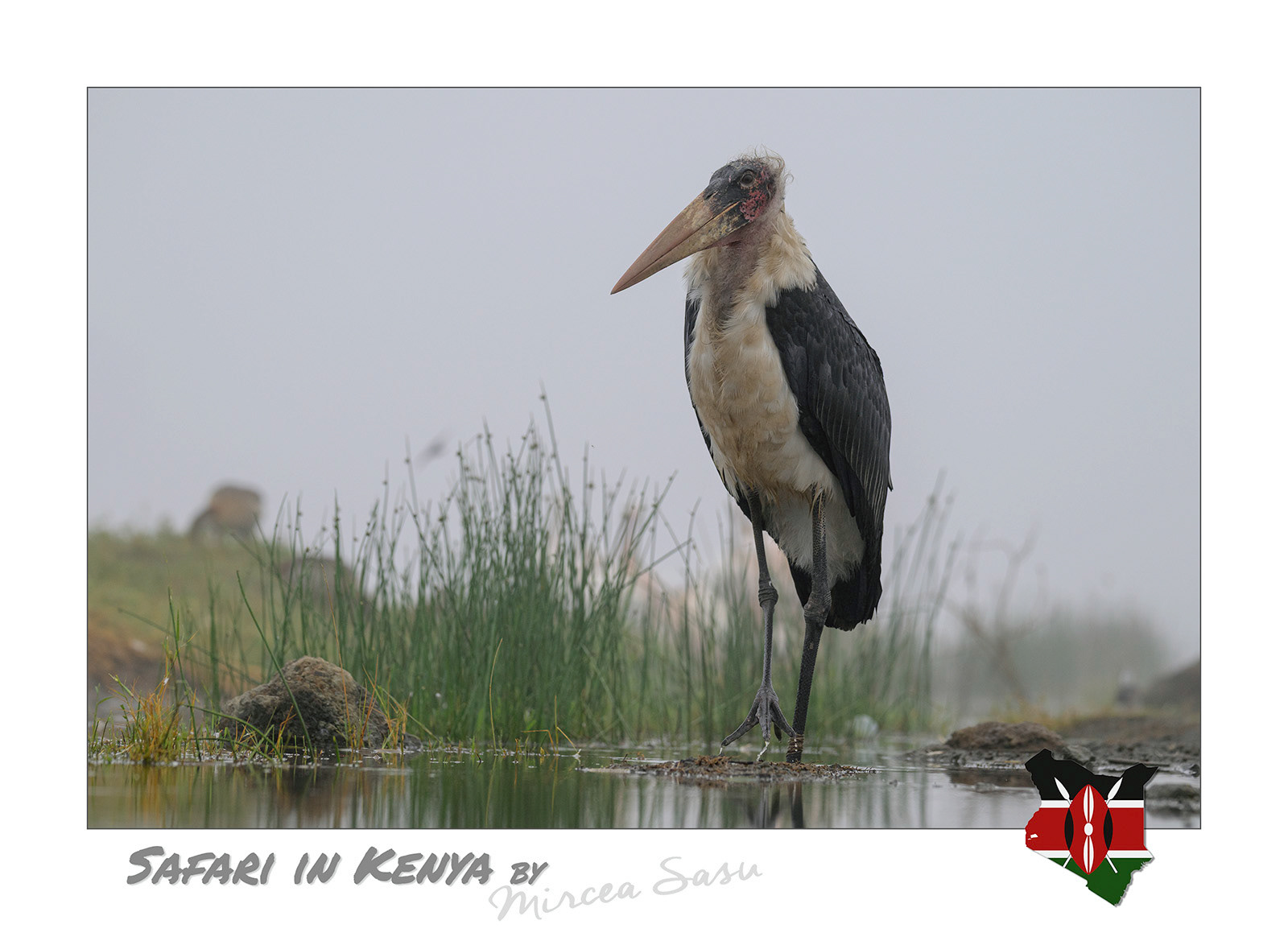
The bare head and neck of the marabou stork are adaptations to its feeding habits as scavengers, same as vultures' case. This way they could keep themself clean easier after getting soiled with blood and other debris when they feed from large corpses. marabou stork (Leptoptilos crumenifer) Lake Nakuru National Park, Kenya
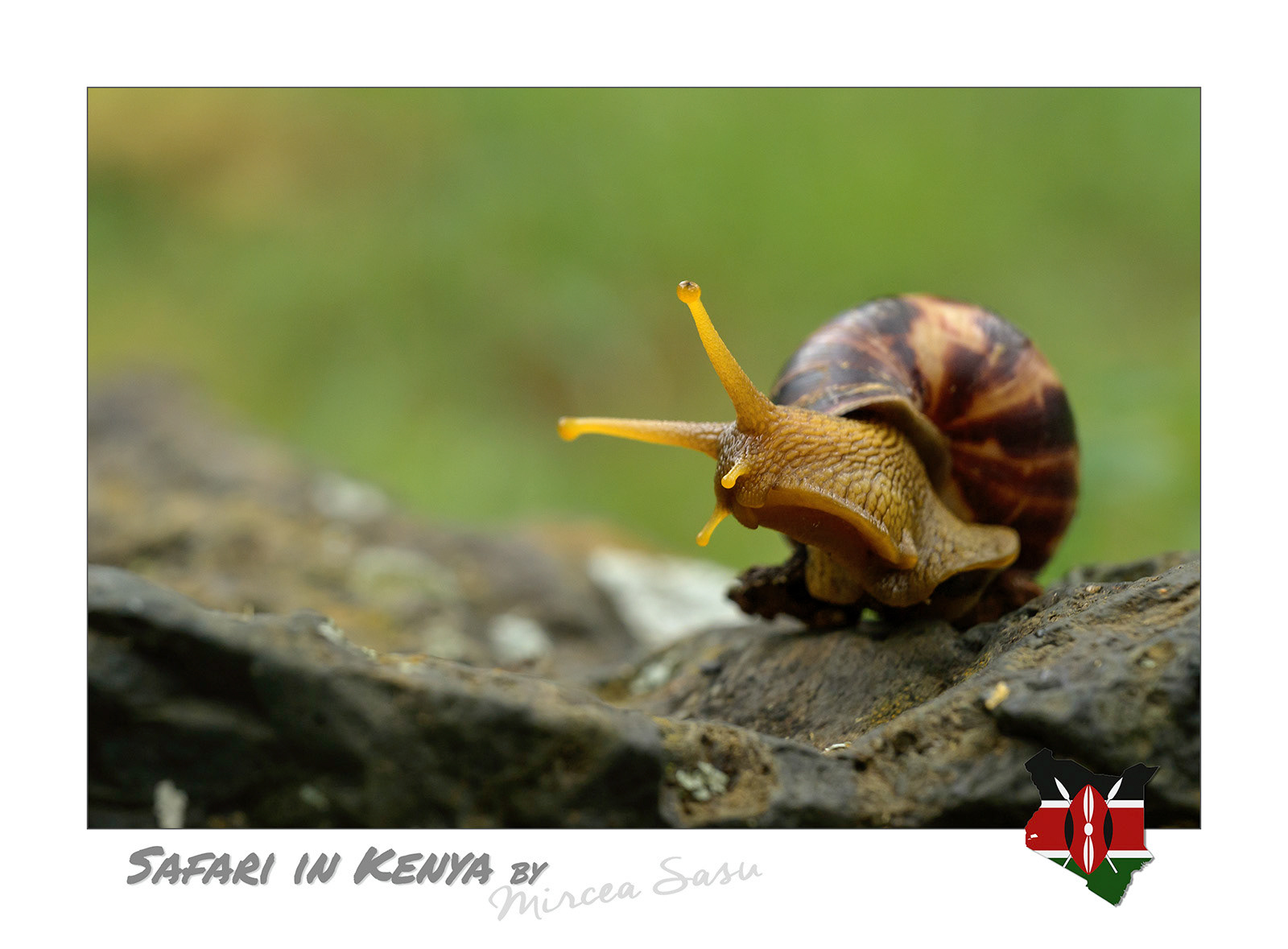
The African giant land snails are very popular as terrarium pets. This way they reached other tropical areas where the escaped or abandoned specimens formed invasive populations that are considered serious pests as they are very destructive to agricultural crops. African giant land snail (Lissachatina fulica) Lake Nakuru National Park, Kenya
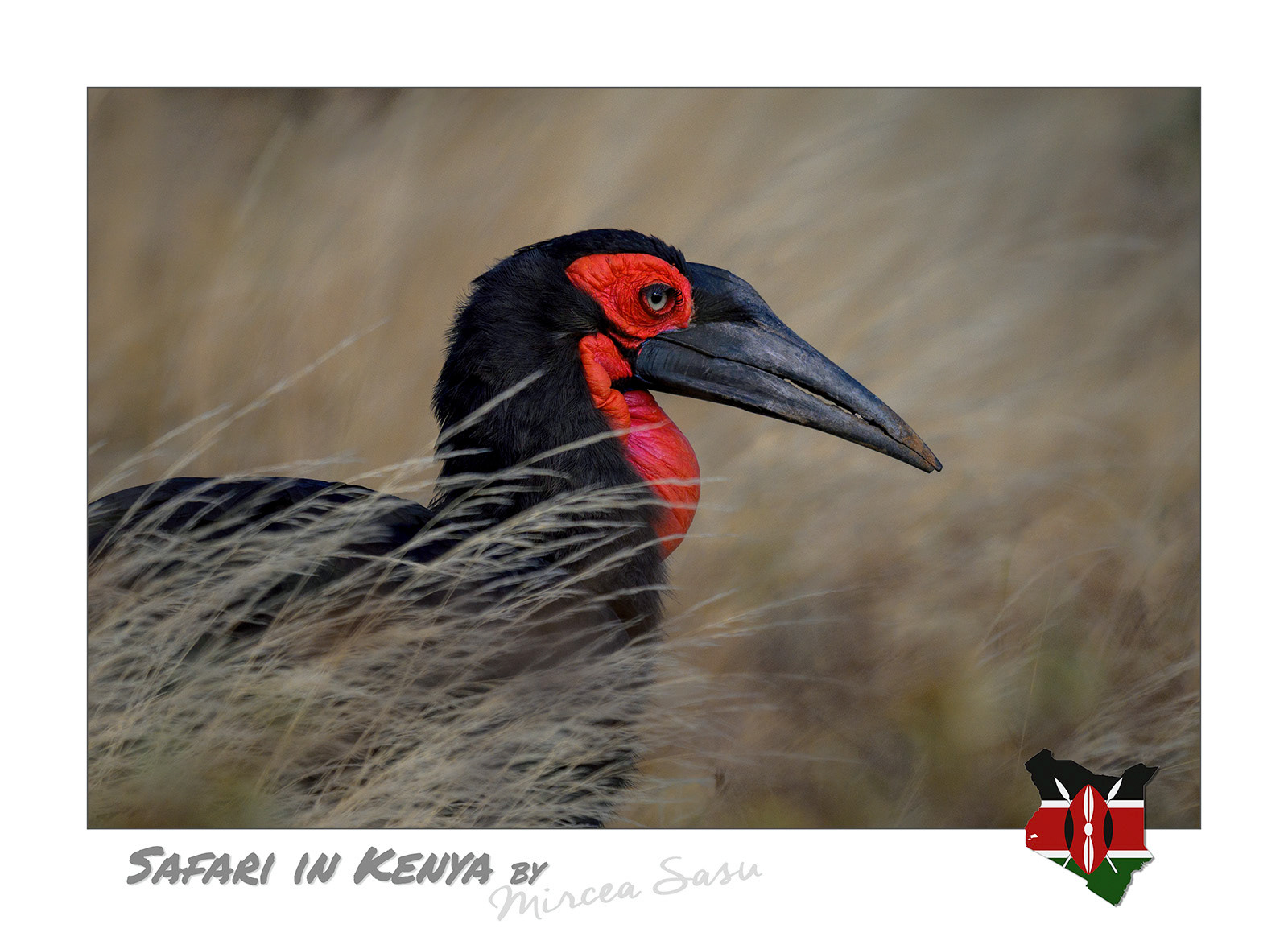
The largest species of hornbill, it is widespread throughout southern Africa and is a long-lived bird. In the wild it can reach ages of 50, 60 years, and in captivity some specimens have lived up to 70 years. southern ground hornbill (Bucorvus leadbeateri) Tsavo East National Park, Kenya
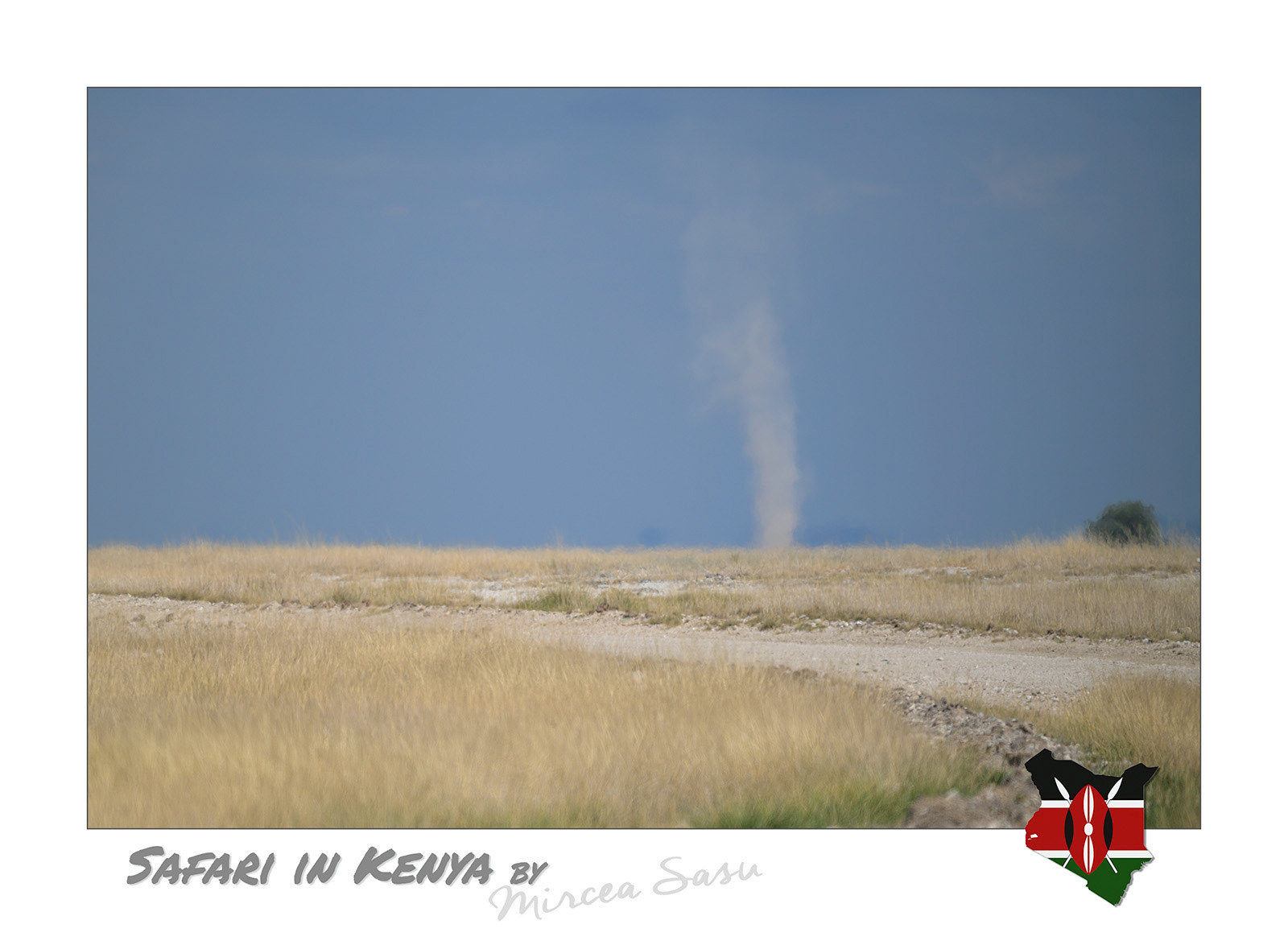
The name Amboseli comes from the Maasai language’s word “empusel” and means plain of salt dust, which very well describes the arid landscape of this park. During dry periods, dust-devils are a frequent phenomenon here. dust-devil Amboseli National Park, Kenya
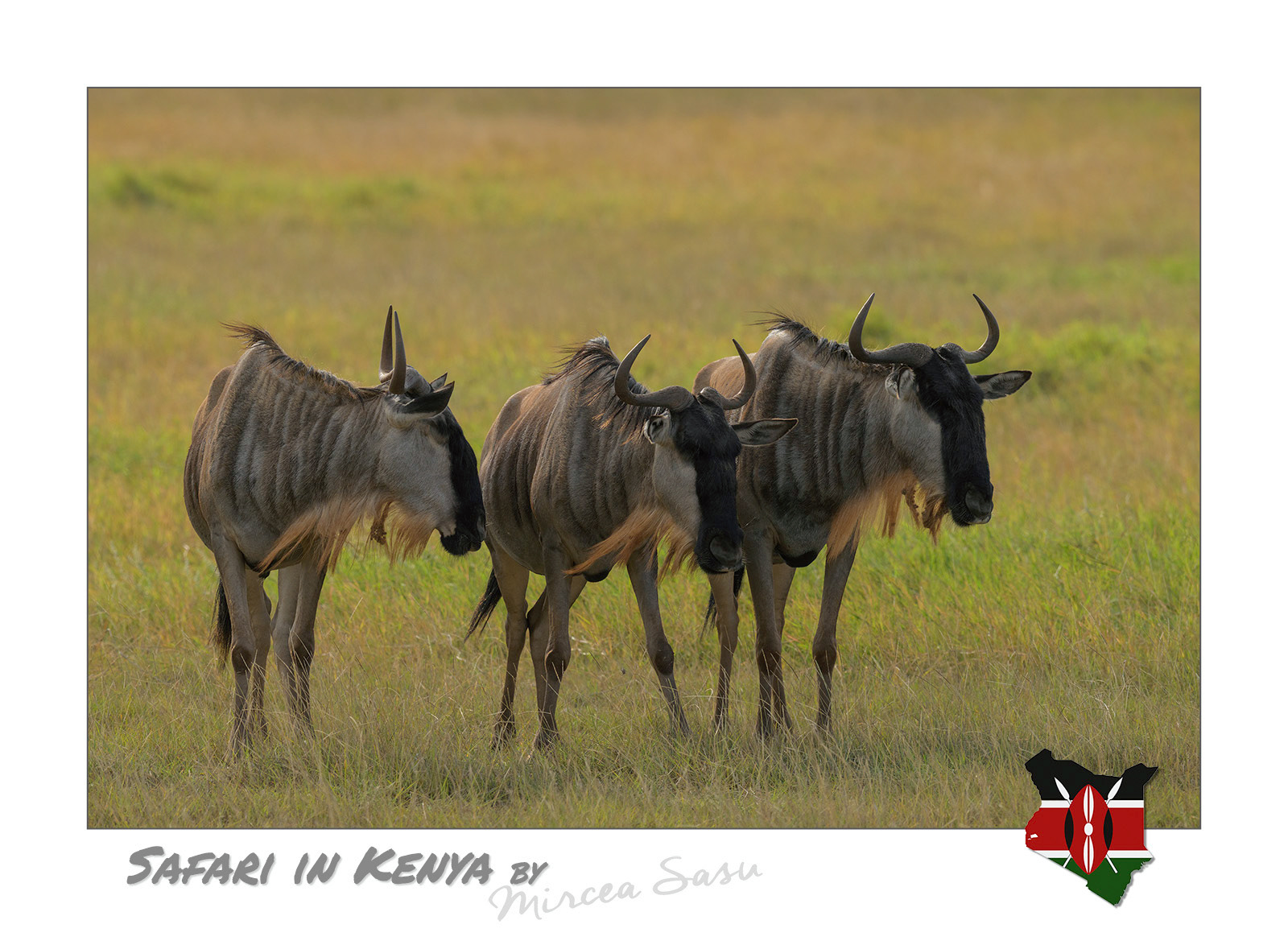
The blue wildebeest is the undisputed star of The Great Migration, the largest mass movements of land mammals on Earth where over 1.5 million blue wildebeests move all year-round through the Mara - Serengeti ecosystem in search for fresh grazing pastures. blue wildebeest (Connochaetes taurinus) Amboseli National Park, Kenya
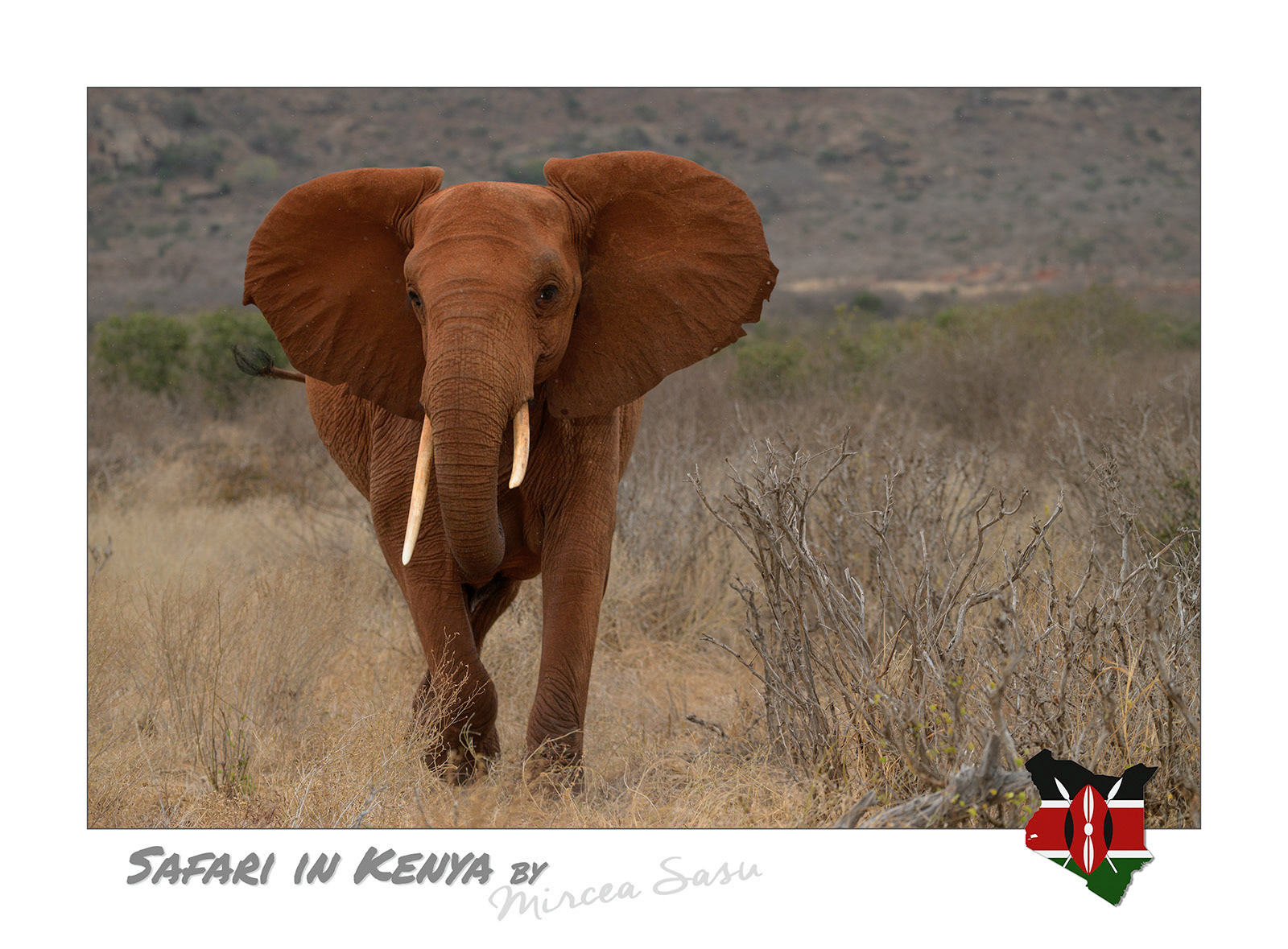
The red elephants are one of the symbols of Tsavo East National Park, the largest national park in Kenya, located in the southern part of this country. Their color is given by the deep red soil specific to the area, which they cover their skin with to protect themselves from insect bites. african elephant (Loxodonta africana) Tsavo East National Park, Kenya
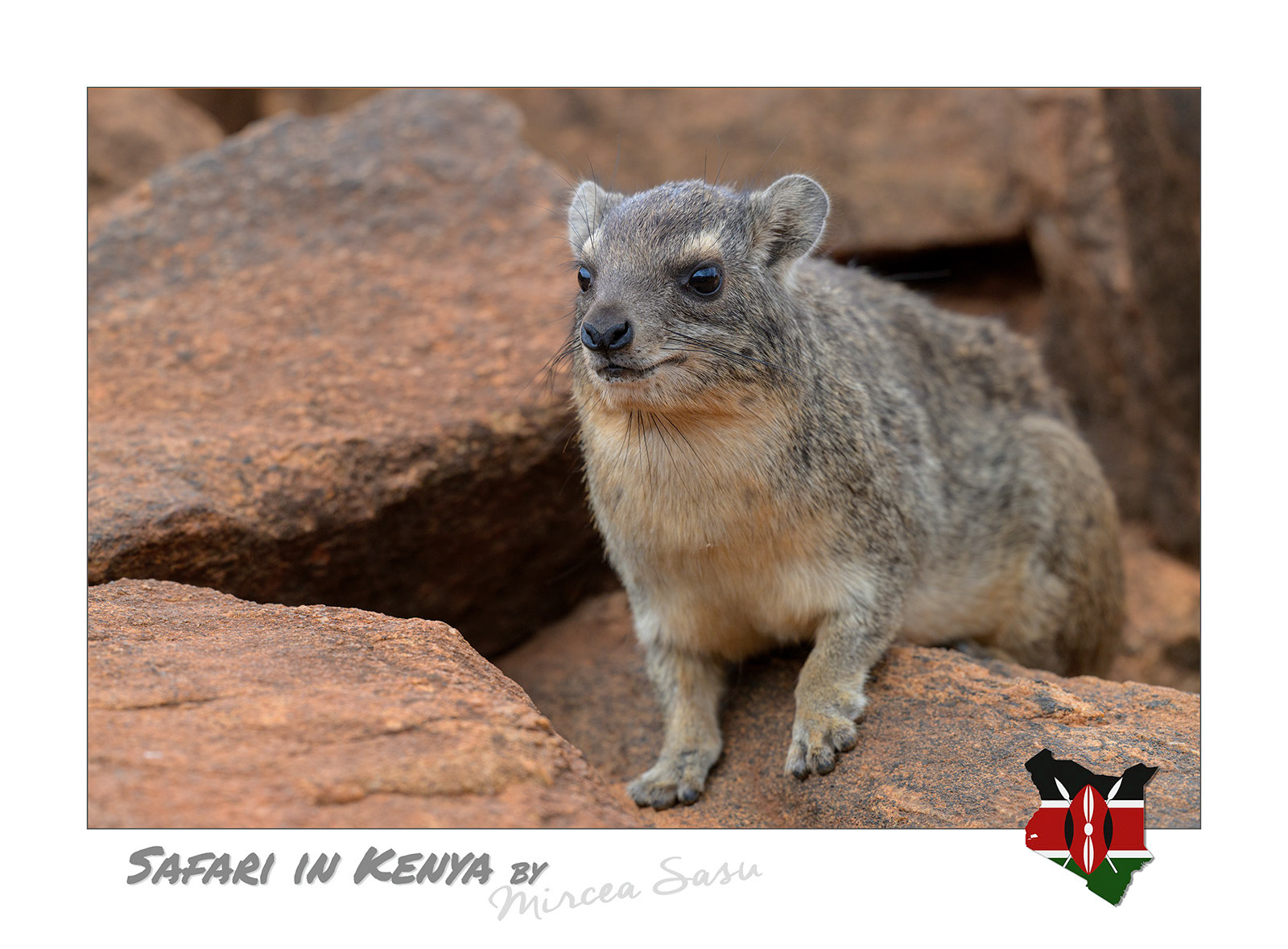
Despite looking like a large rodent, the rock hyrax, one of two hyrax species, is actually a close relative of the elephant and manatee, sharing similar anatomical features, such as leg structure and tusk-like incisors. rock hyrax (Procavia capensis) Tsavo East National Park, Kenya
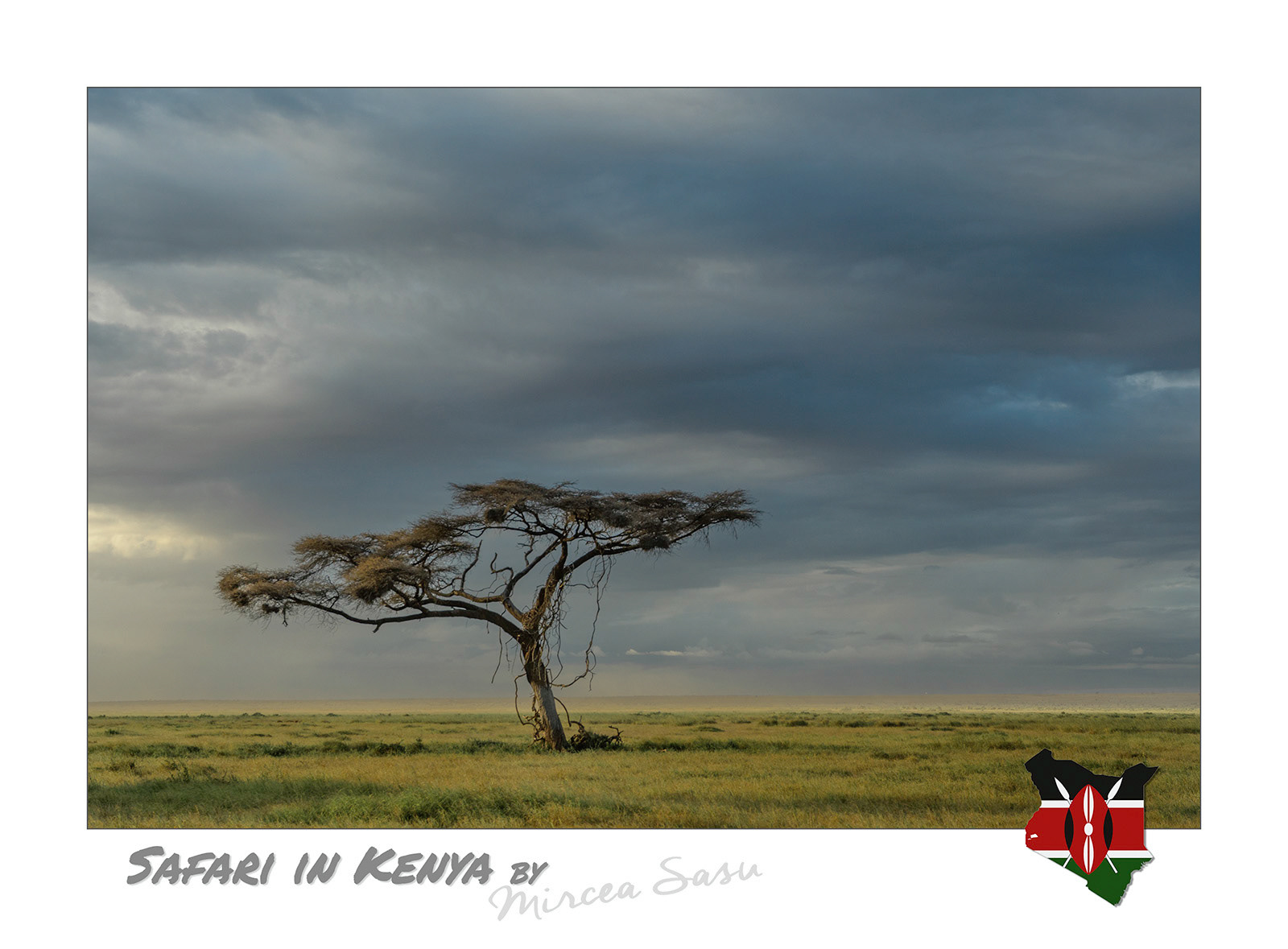
Perhaps the image that most people immediately associate with the African savannah is that of the acacia trees with their unmistakable umbrella-like appearance. With deep roots that allow them to access water sources and small leaves that reduce water loss through evaporation, these trees are perfectly adapted to arid environments. umbrella thorn (Vachellia tortilis) Amboseli National Park, Kenya
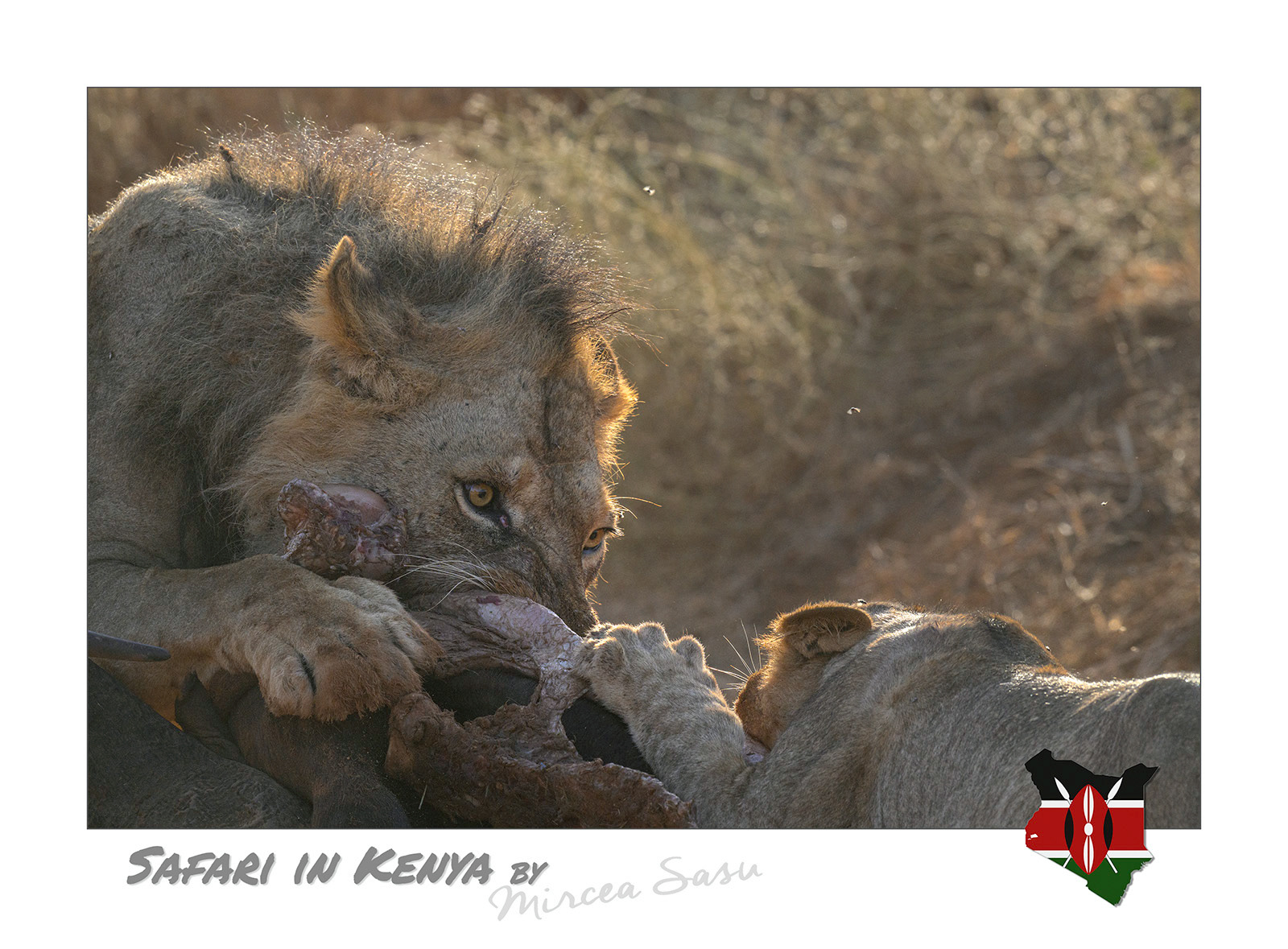
Although they rarely take part in the hunting, adult males in a pride are the first to feed on the kill, followed by adult females and then juveniles and cubs. This hierarchy is generally respected by members of the pride, with those who are too impatient being quickly schooled by the dominant individuals. African lion (Panthera leo leo) Tsavo East National Park, Kenya
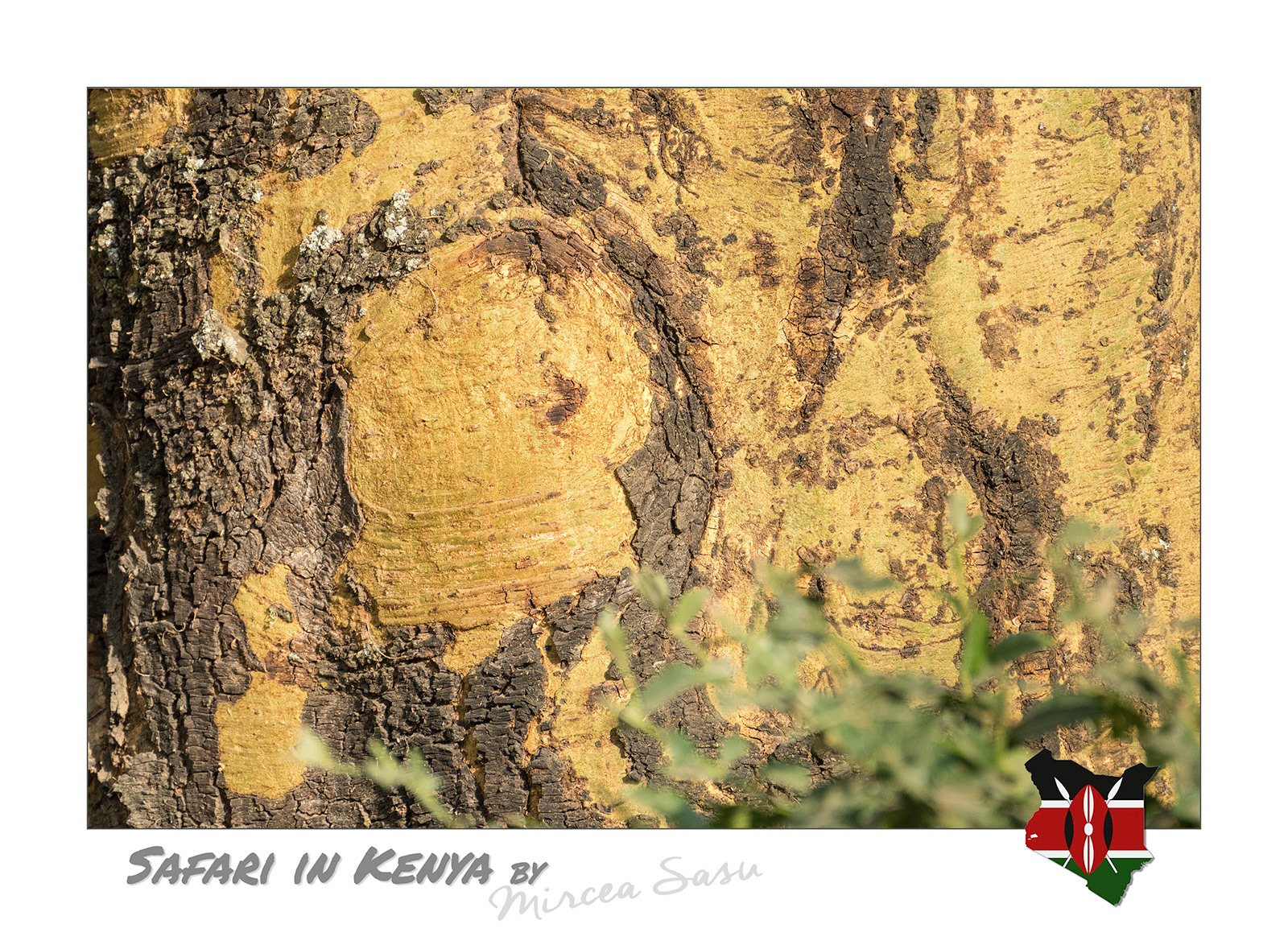
One of the few trees in which photosynthesis also occurs in the bark, the yellow fever tree gets its name from a misunderstanding. Early European settlers of the African continent associated this swampy tree with diseases transmitted by mosquitoes that use stagnant water to breed. yellow fever tree (Vachellia xanthophloea) Lake Nakuru National Park, Kenya
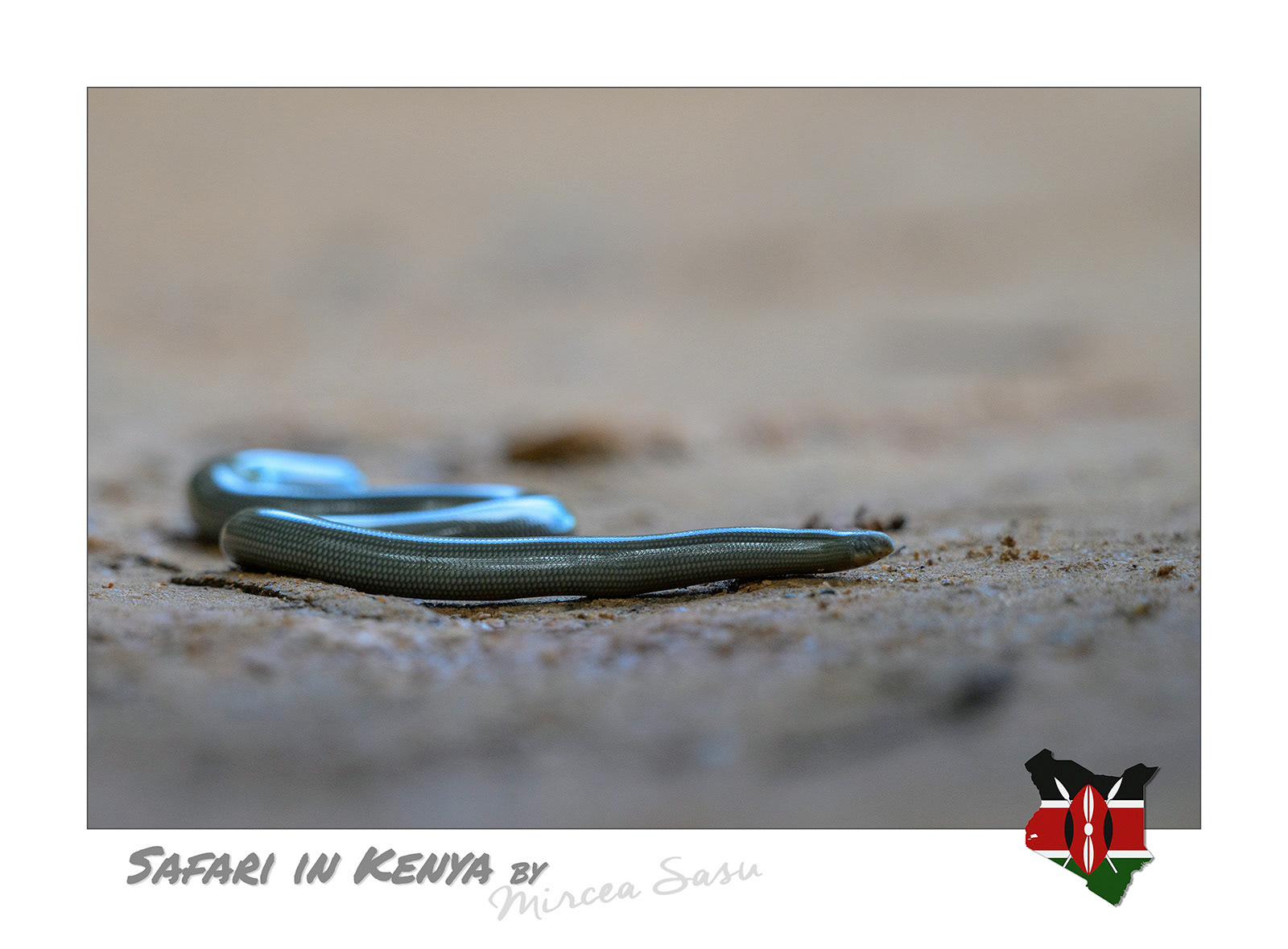
Looking more like an earthworm than a snake, the blind snake is not actually blind, its eyes are extremely small and covered with scales. It lives mostly underground, feeding on ants and termites. It is completely harmless to humans. blind snake (Afrotyphlops sp.) Kakamega Forest Reserve, Kenya
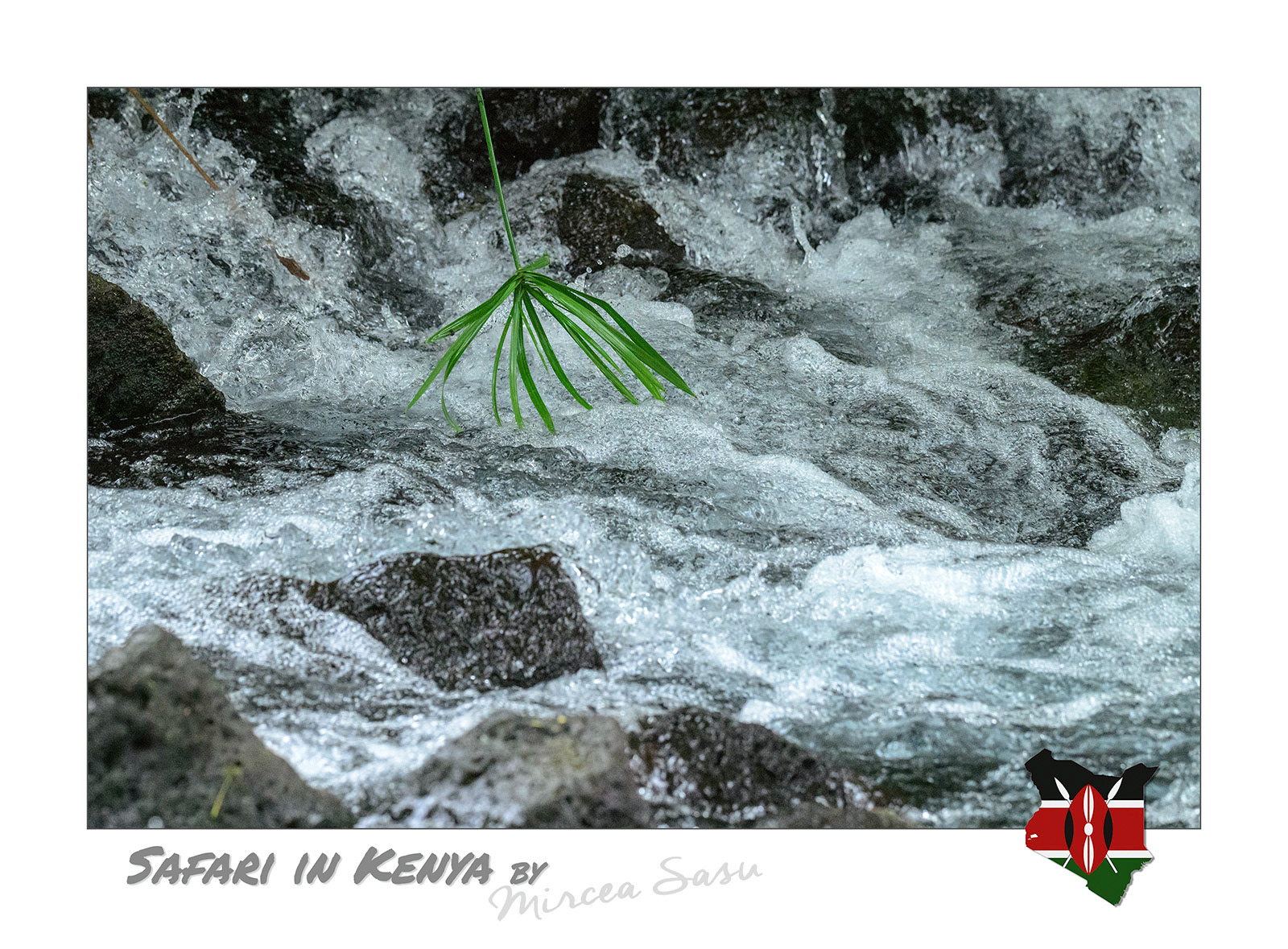
The Tsavo River originates in the Chyulu Hills, where it disappears into the extremely porous volcanic soil. It is estimated that the water spends 25 years to travel the 50 kilometers to the place where it reappears on the surface through the Mzima spring. Due to this natural filtration process, the water of the spring is extremely pure. Mzima Springs Tsavo West National Park, Kenya
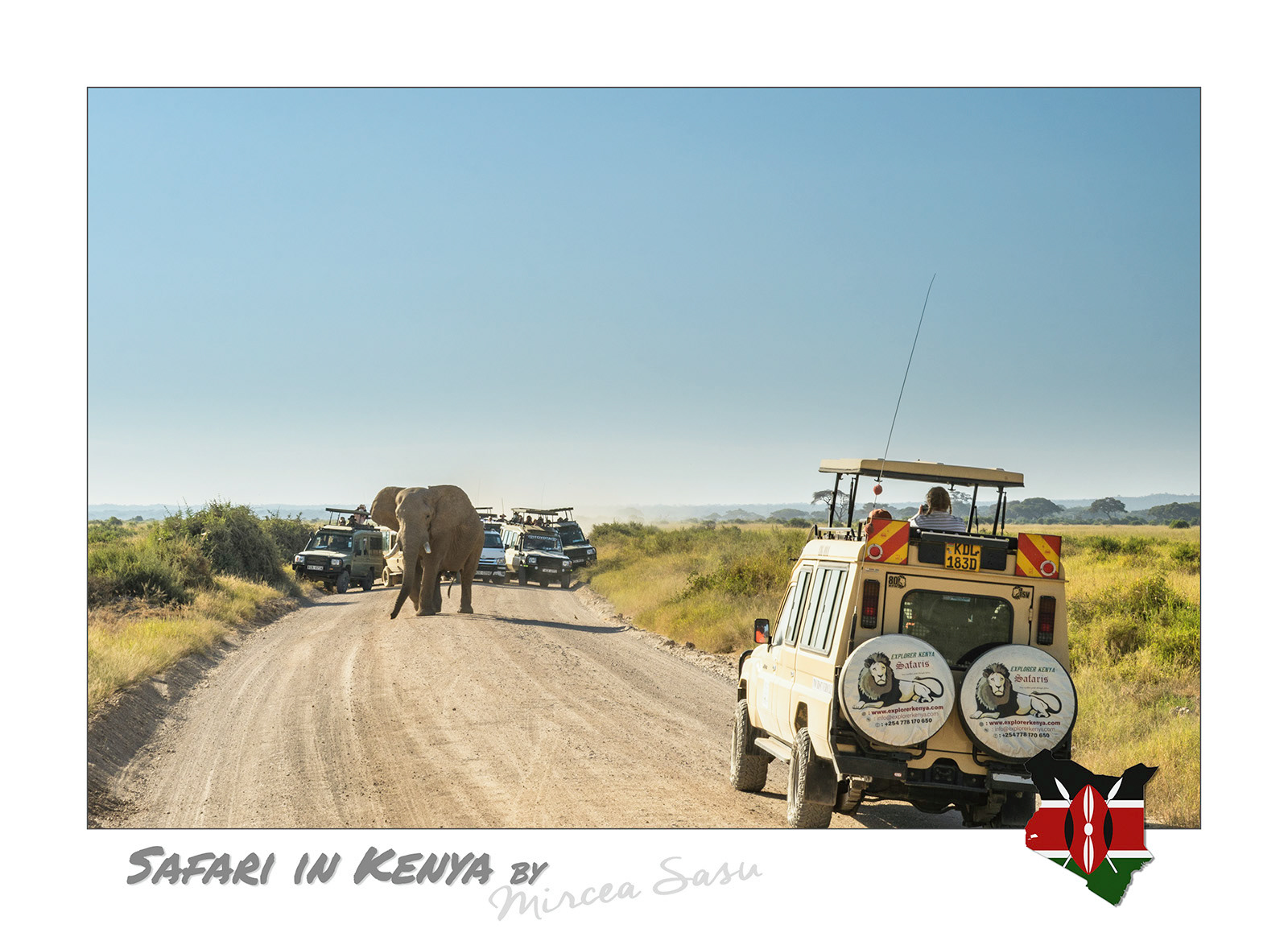
The raising in popularity of African natural parks could be beneficial to conservation and local communities as it generates income, however it puts a growing pressure on nature. The large numbers of visitors often came with noise, pollution, habitat degradation of habitats, soil erosion, and disturbance of wildlife. traffic jam Amboseli National Park, Kenya
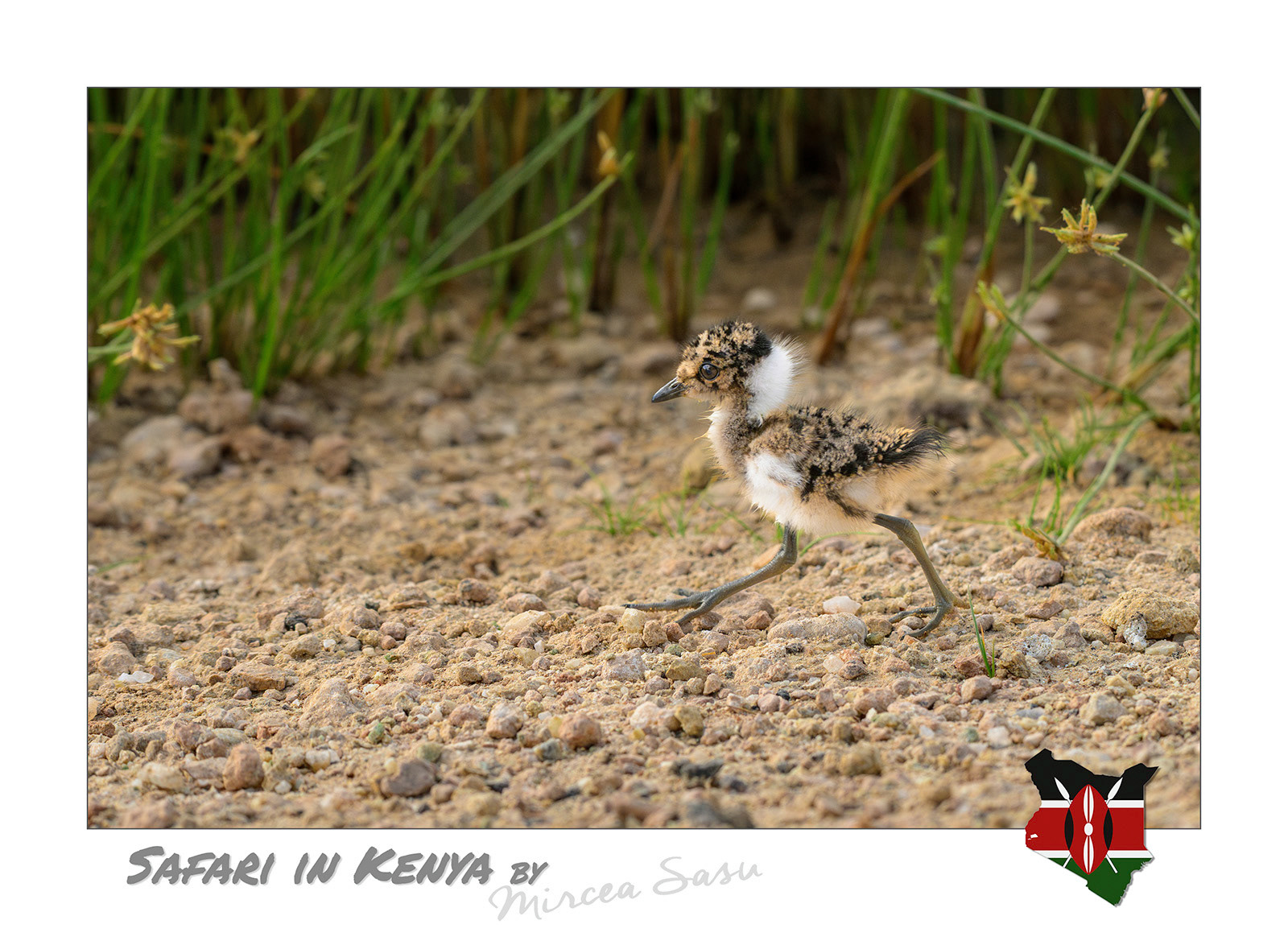
The chicks of birds that nest on the ground in exposed areas, like many lapwing species, have an adaptation that increases their chanse to survival. They hatch already developed with strong leg muscles, covered in down and with their eyes open, so don’t need long nest care and are able to run for safety soon after hatching. blacksmith lapwing, chick (Vanelus armatus) Amboseli National Park, Kenya
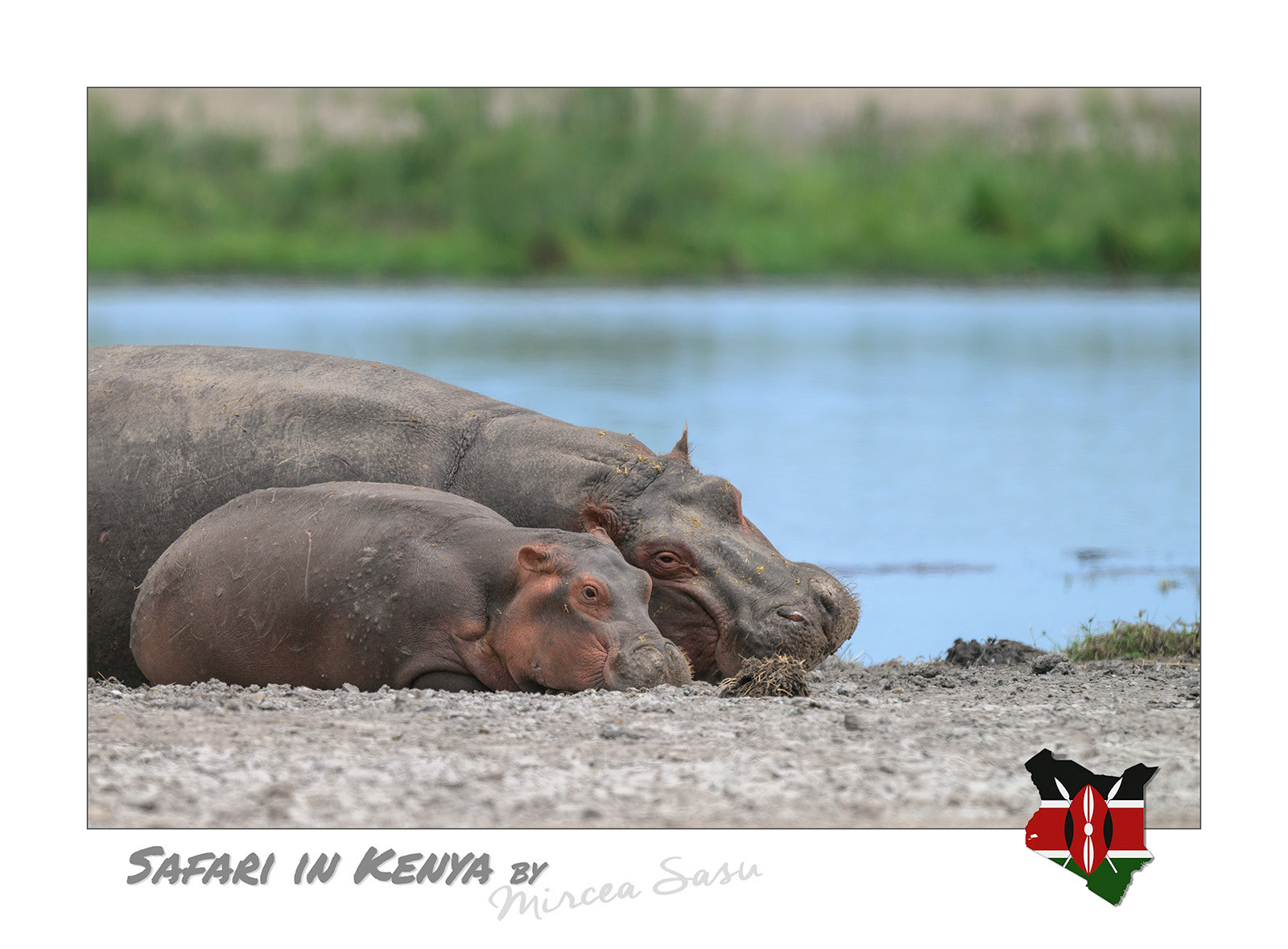
Although they spend most of their time in the water, hippos cannot actually swim. However, they can move quickly through the water by walking on the bottom. hippopotamus (Hippopotamus amphibius) Amboseli National Park, Kenya
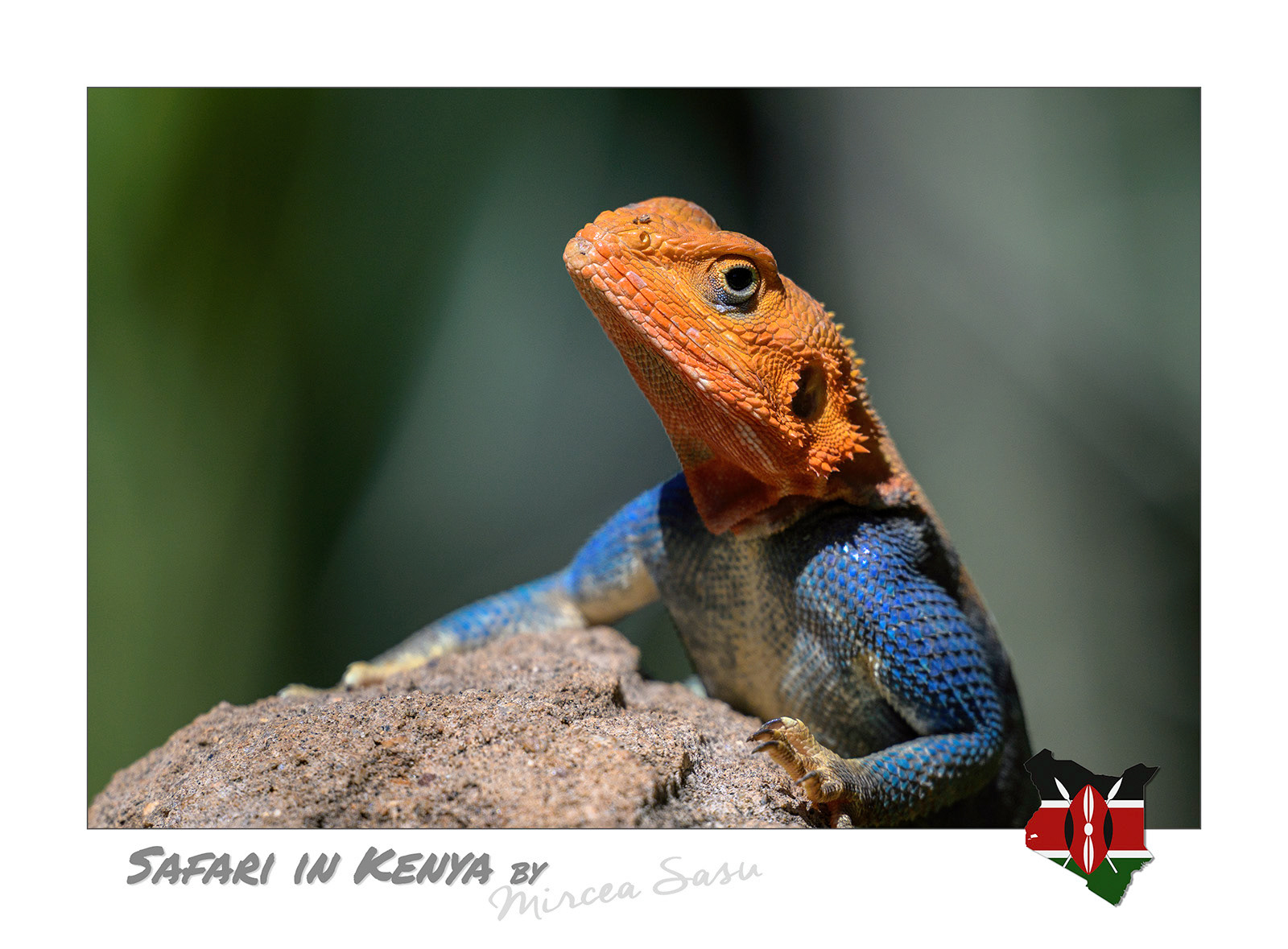
During mating season, the head of agama lizards turns orange or reddish, while their body becomes bright blue. This transformation is intended to attract females, but also serves to intimidate rivals. agama lizard (Agama lionotus) Tsavo East National Park, Kenya
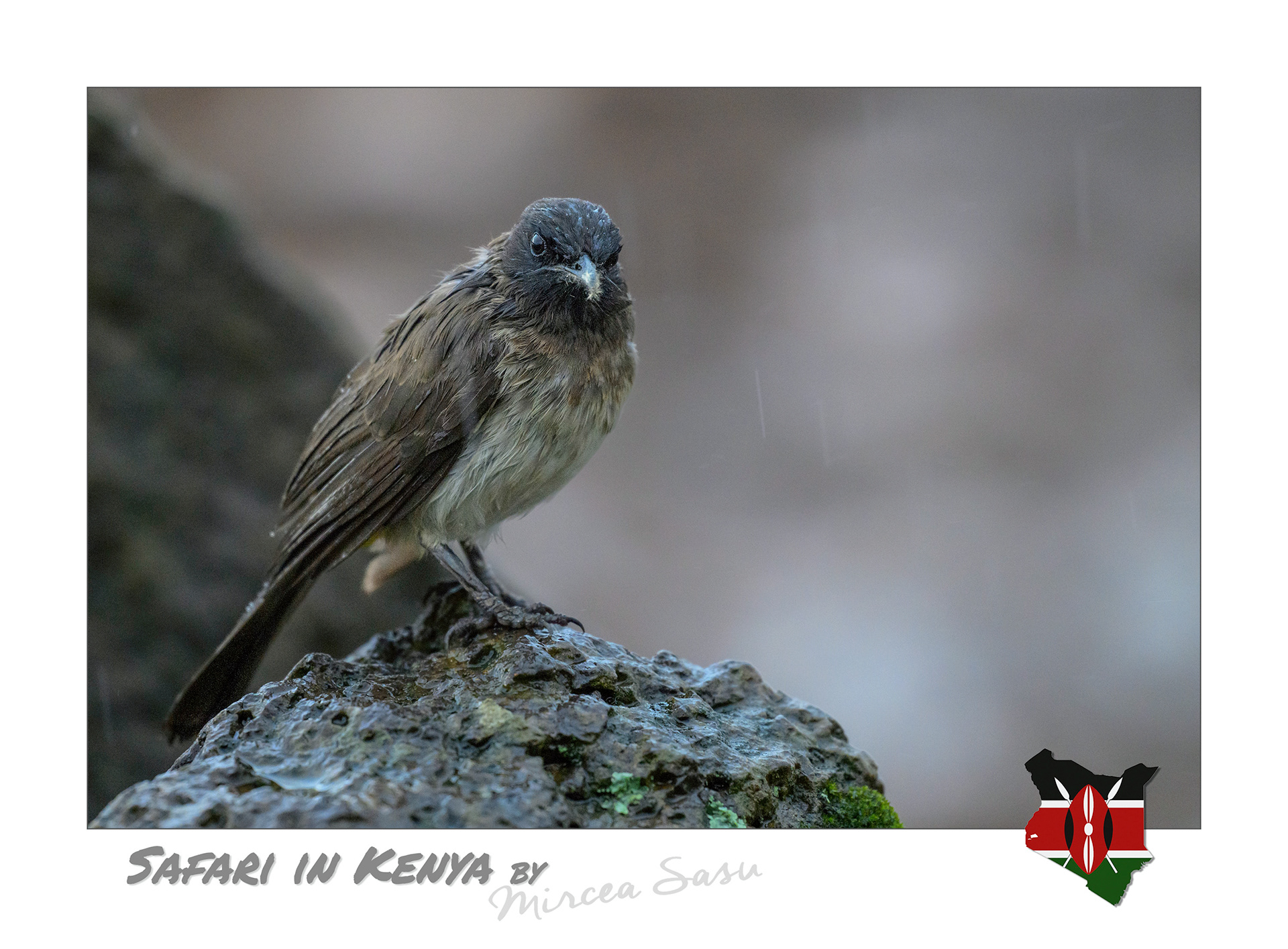
In East Africa, perioadele de seceta alternate with two rainy seasons: the "Long Rains," lasting from March to May, and the "Short Rains," from October to December. These bring a vital refreshment to the arid landscape, sustaining life. common bulbul (Pycnonotus barbatus) Aberdare National Park, Kenya
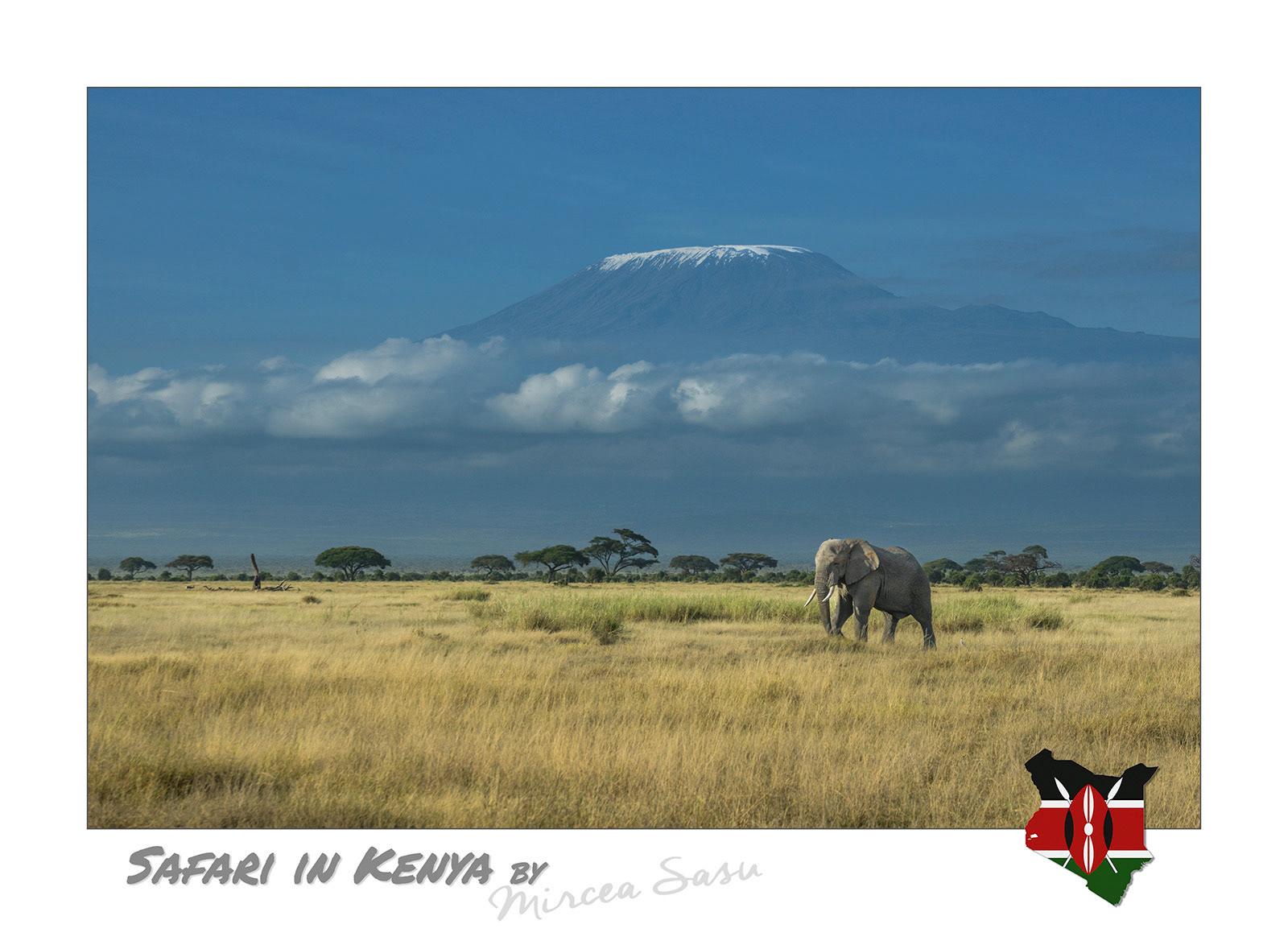
An extinct volcano, Kilimanjaro is the highest mountain on the African continent, with its 5,895 m (19,340 ft) Uhuru peak, and the highest free-standing mountain in the world. Locals affectionately call it the shy mountain, because its peak is almost permanently covered in clouds. Kilimanjaro Mountain Amboseli National Park, Kenya
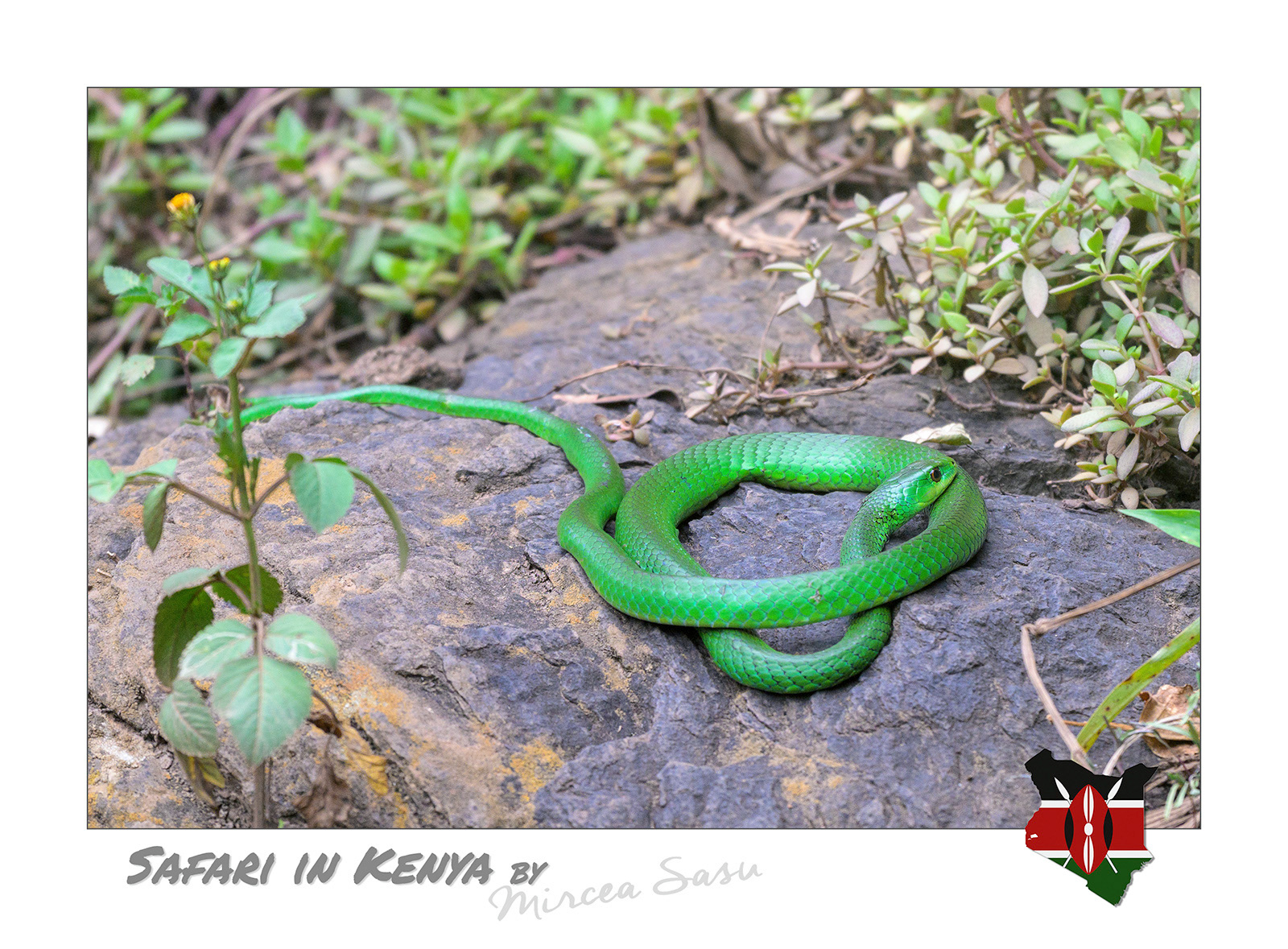
By a simple coincidence, all species of snakes with round pupils from Romania are non-venomous. It is important to note that this rule no longer applies in other areas of the world, where many venomous species have round pupils. Battersby's Green Snake Africa (Philothamnus battersbyi) Lake Nakuru National Park, Kenya
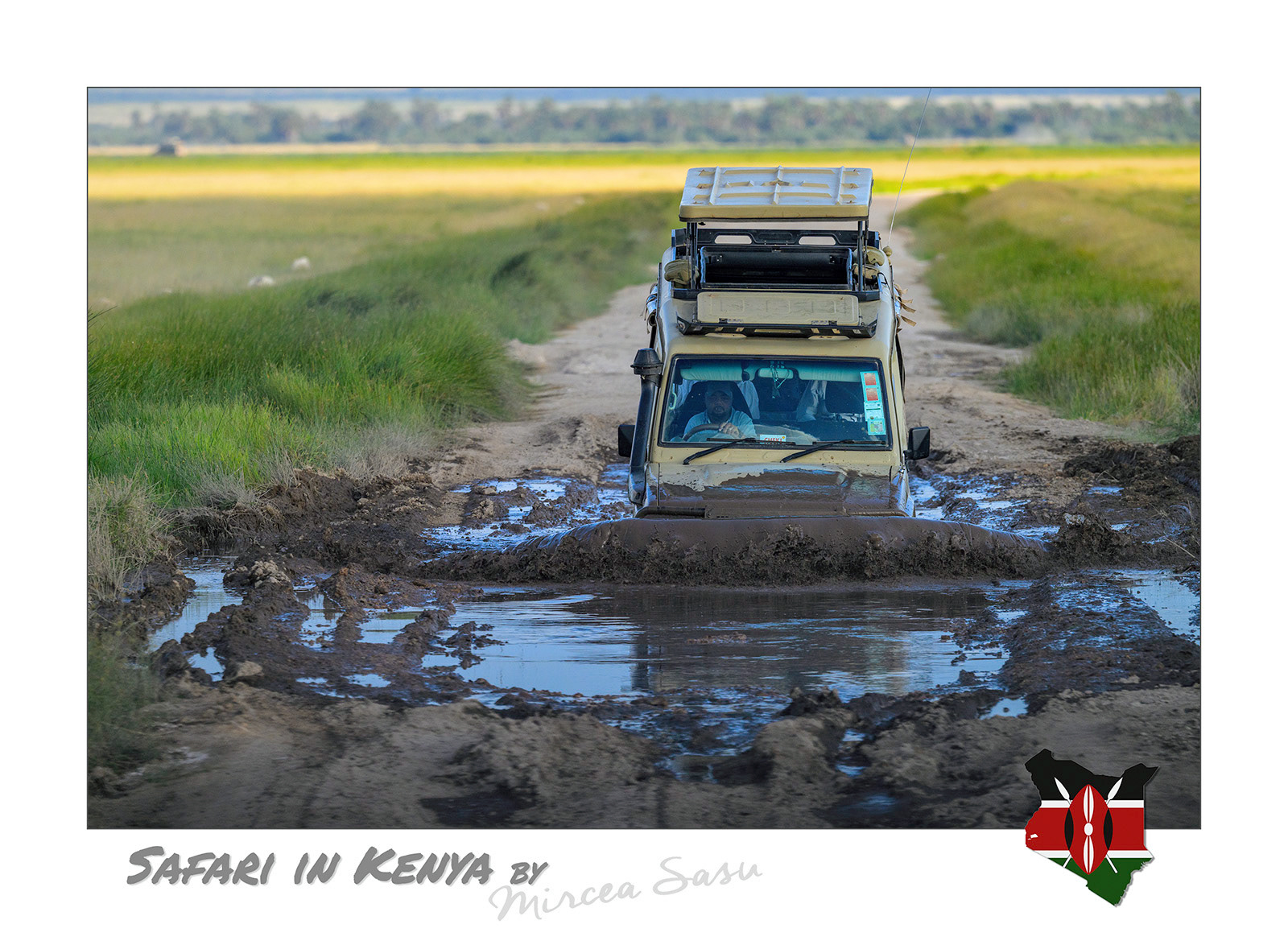
During the rainy season, access roads to African nature reserves can become impassable. The mud and puddles require four-wheel drive vehicles, but even these can sometimes get stuck. mud pool Amboseli National Park, Kenya
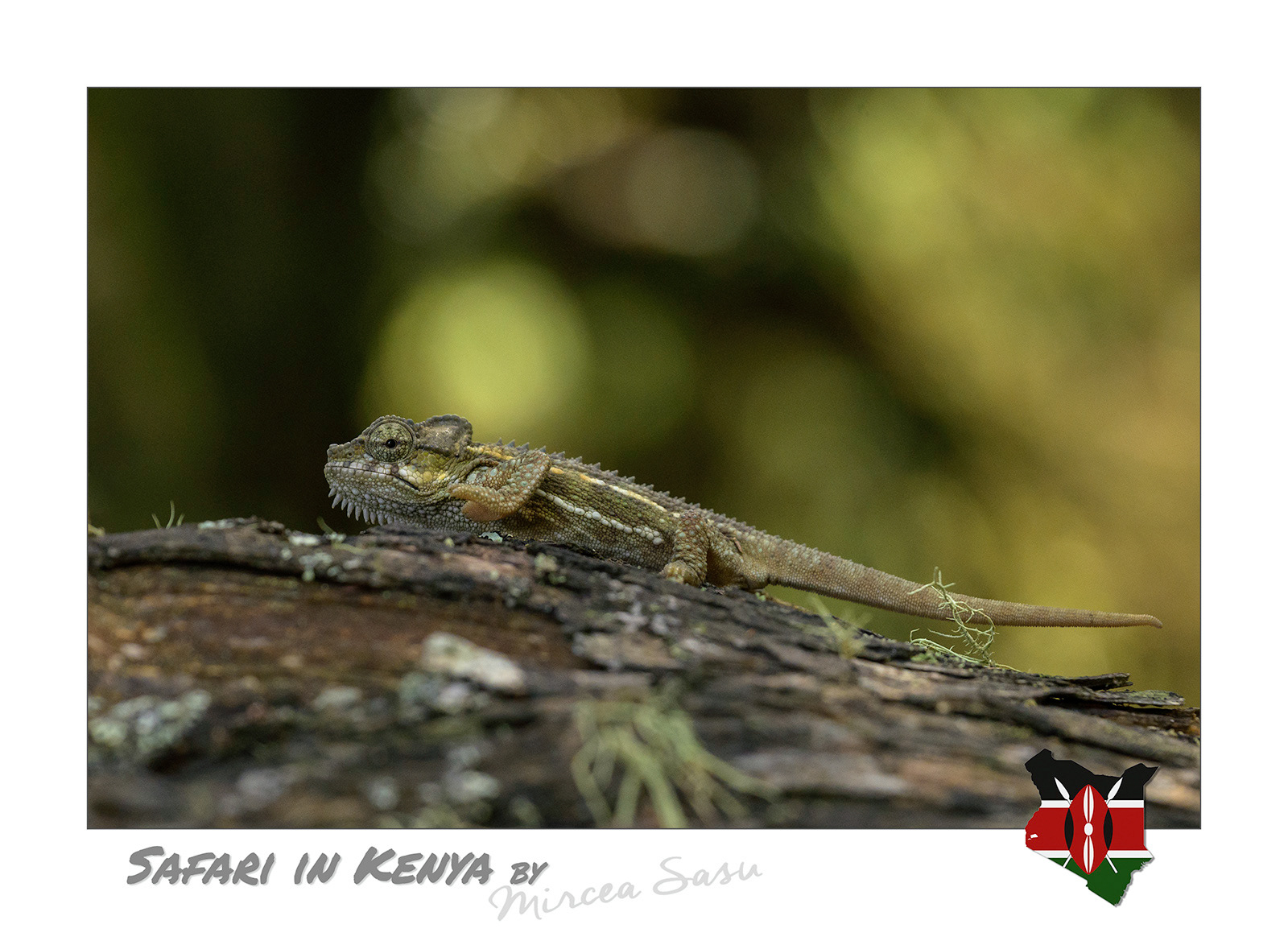
Although the chameleon is capable of changing its skin color, it does not do so for camouflage purposes, as is popularly believed. The color change actually serves a role in communication, intimidating rivals, or communicating the animal's mood. Von Hoehnel‘s high-casqued chameleon (Trioceros hoehnelii) Aberdare National Park, Kenya
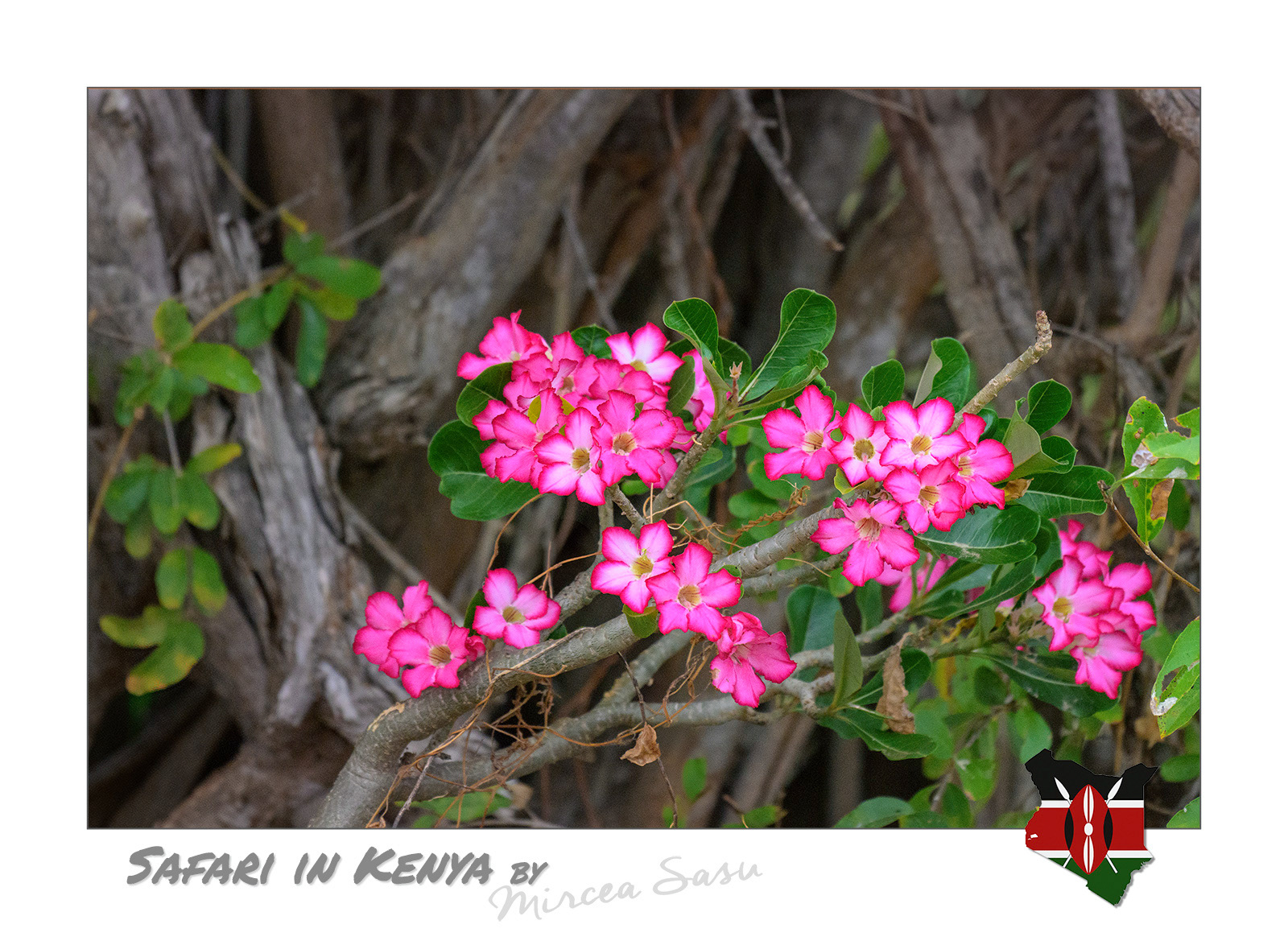
The desert rose has a vigorous stem that functions as a moisture reservoir, an adaptation necessary to withstand the extreme drought of the African savannahs. Its efficiency is enhanced by the small leaves, covered with a protective layer of wax to limit the loss of vital fluids. desert rose (Adenium obesum)
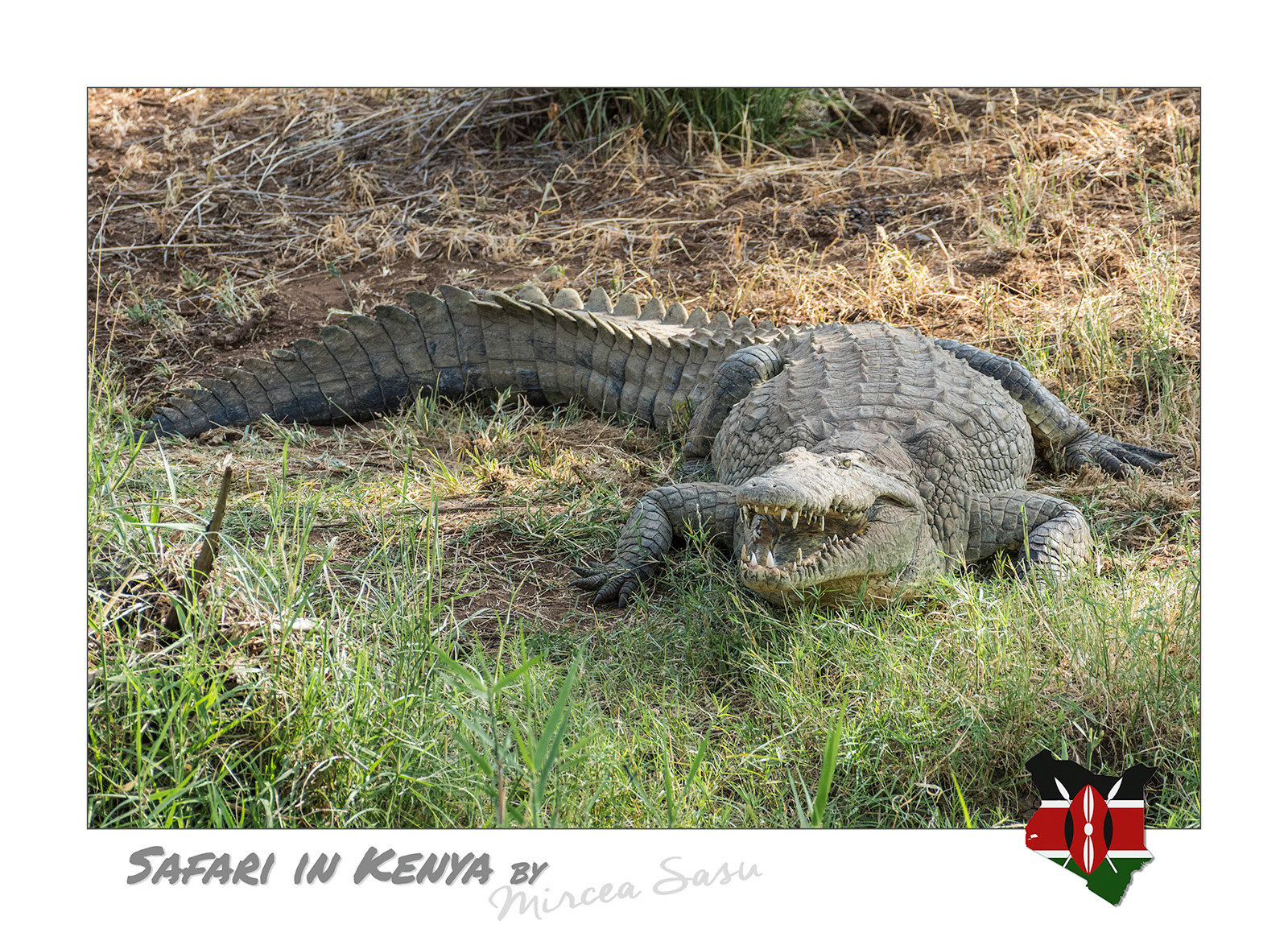
A model of efficiency in the animal world, crocodiles have been around for more than 80 million years, their ancestors being contemporary with dinosaurs. Their jaws have one of the strongest bites in the animal kingdom, allowing them to easily crush the bones of their prey. Nile crocodile (Crocodylus niloticus) Buffalo Spring National Park
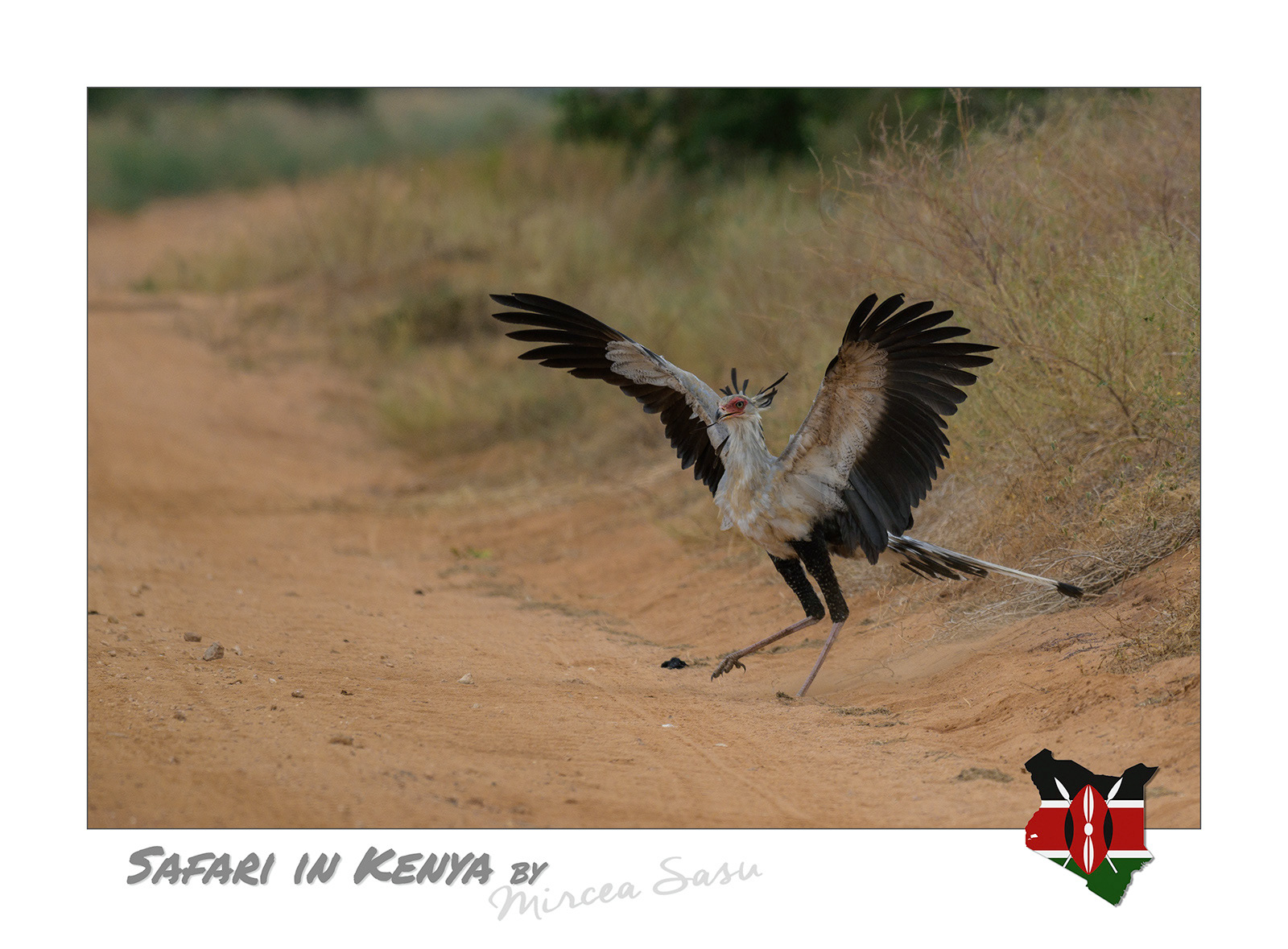
The scientific name of the secretary bird is a combination of the words Sagittarius, which means “archer” in Latin, and serpentarius, which comes from the Latin word for snake, “serpens”. The name aptly describes the species, which uses its long legs to immobilize its prey on the ground, which it then kills with blows of its beak. secretary bird (Sagittarius serpentarius) Tsavo East National Park, Kenya